
Accessibility Compliance UK: The 2026 Guide
Compliance is not a single certificate. The UK regime combines the Equality Act 2010, the Public Sector Bodies Accessibility Regulations 2018, and Building Regulations Part M, with digital compliance reaching 70% in the Government's 2022–2024 monitoring period and 16,482 of 29,787 recorded issues fixed by monitored organisations (GOV.UK monitoring report).
A venue can pass a website audit and still leave a visitor unable to find an accessible entrance, lift, platform, or seating area. That's the operational reality behind accessibility compliance UK. A public body, stadium, transport operator, university, or shopping centre needs a programme that connects digital standards, physical access, user research, wayfinding, maintenance, and evidence.
The Reality of UK Accessibility Compliance
A checklist can confirm that a door width is recorded, a statement is published, or a website has passed an automated scan. It can't confirm that a blind visitor can reach the right entrance after a temporary closure, that a screen-reader user can complete a booking journey, or that a person using a mobility aid can follow an altered route through a crowded venue.
That distinction matters in places such as stadiums, campuses, hospitals, shopping centres, and transport hubs. Their layouts change, contractors move barriers, lifts go out of service, and temporary signs appear without being reflected in digital content. Accessibility is therefore a live service condition, not a document stored in a compliance folder.
Three laws, one visitor experience
The Equality Act 2010 requires organisations to make reasonable adjustments where a disabled person would otherwise face substantial disadvantage. The duty can involve policies, physical features, and auxiliary aids, including providing information in an accessible format (Equality Act 2010).
The Public Sector Bodies (Websites and Mobile Applications) (No. 2) Accessibility Regulations 2018 apply to public-sector websites, mobile apps, and relevant intranets and extranets. They require accessible services, an accessibility statement, and conformance with the applicable WCAG criteria (2018 Regulations).
For the built environment, Part M of the Building Regulations requires reasonable provision for people to access and use buildings and their facilities. Approved Document M Volume 2 sets out the detailed expectations for non-domestic buildings, including circulation, entrances, thresholds, signage, and usable facilities (Parliamentary evidence on Part M).
Practical rule: A compliant service must work across the whole journey, not just at the point where an auditor tested it.
The same principle applies to online learning and public information. Clear visual content, accessible documents, captions, and well-structured navigation support inclusive participation, alongside resources such as online photography education for all. For Waymap's audience, the question is not whether one audit passed. It's whether the organisation can maintain usable access when people, places, and information change.
The Three Pillars of Legal Obligation
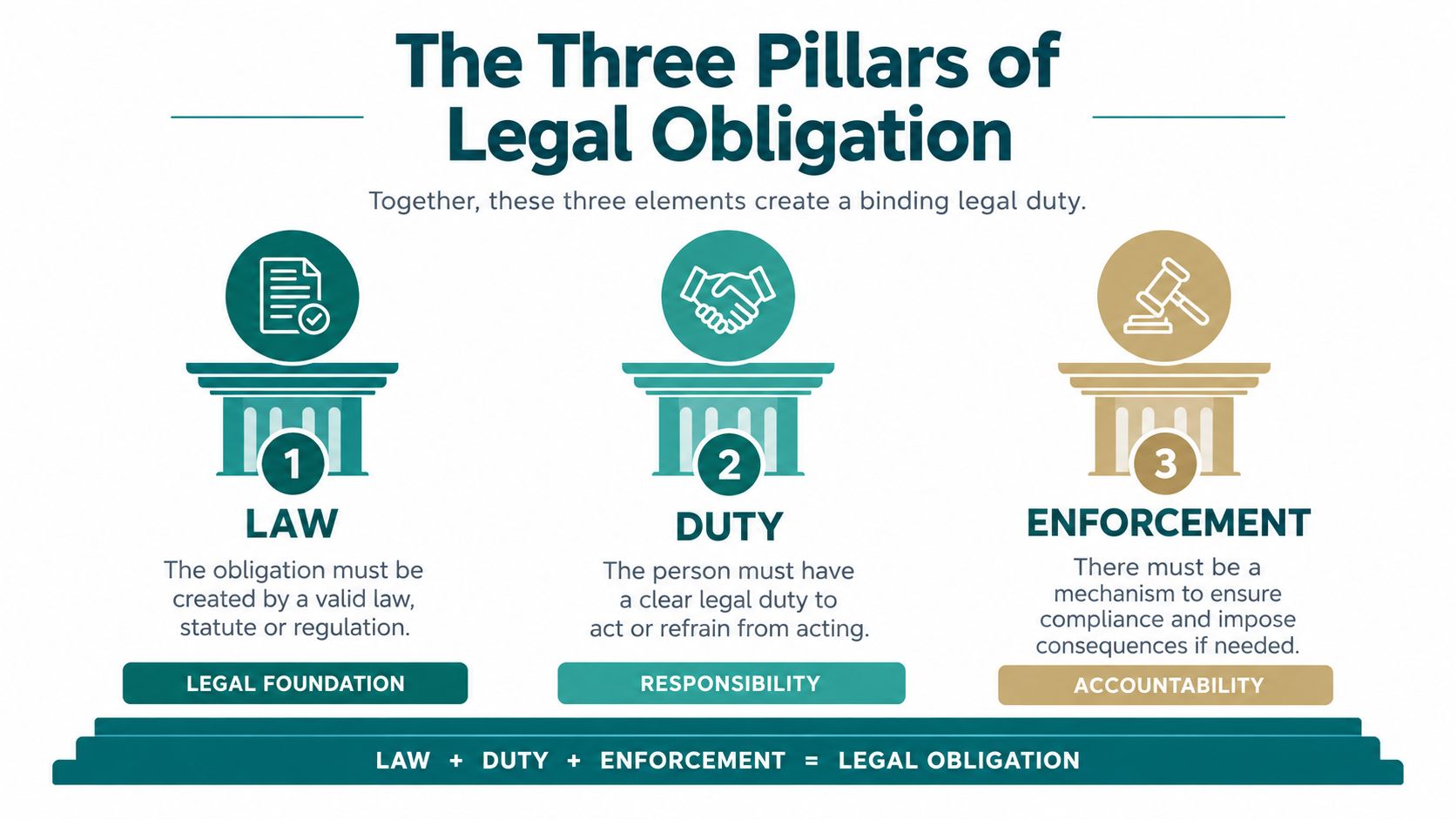
A public venue can satisfy one accessibility requirement and still leave a visitor unable to complete the journey. UK compliance becomes more manageable when organisations separate the legal source of an obligation, the practical duty it creates, and the evidence needed to show that delivery works.
Equality Act 2010
The Equality Act sets the broadest expectation. Service providers, employers, and public authorities must consider whether disabled people face a substantial disadvantage and make reasonable adjustments where required. An adjustment may change a process, improve a physical feature, provide assistance, or present information in an accessible format.
A digital service can therefore meet technical criteria while creating a legal and operational problem. If an inaccessible booking flow prevents someone from obtaining a ticket, the organisation may need an alternative route to complete the purchase. If route information fails to identify a usable entrance, accessible infrastructure may exist but remain difficult to use.
Public-sector digital regulations
The 2018 regulations established specific digital milestones. They came into force on 23 September 2018. New public-sector websites had to comply from 23 September 2019, older websites from 23 September 2020, and mobile apps from 23 June 2021 (regulatory text and dates).
Current GOV.UK guidance says public-sector services and apps should meet WCAG 2.2 Level AA as a minimum, publish an accessibility statement, describe known issues, and offer a contact route for people who need help (GOV.UK accessibility requirements). Delivery also depends on accessible content, assistive technology compatibility, and change control. WCAG cannot remain a one-off procurement checkbox.
Part M and the built environment
Part M addresses physical access through building performance. It works alongside the Equality Act, while leaving operational wayfinding as a separate delivery responsibility. An accessible entrance does not help if visitors cannot locate it, the signed route is blocked, or temporary changes make the published directions inaccurate.
The monitoring evidence introduced earlier shows that implementation remains the harder half of compliance. GOV.UK also reports that many public-sector websites and apps do not fully meet accessibility requirements, including a finding that 4 in 10 local council homepages failed basic accessibility tests (Government monitoring findings).
Organisations working across jurisdictions can use guidance to meet EU digital accessibility rules, while UK duty holders still need to map their own responsibilities. This UK accessibility standards guidance helps connect digital requirements with physical access, operational processes, and infrastructure-free navigation such as Waymap's, turning static rules into directions that can respond to real conditions.
From Static Rules to Living Standards
A service can pass an automated scan while a visitor still cannot complete a journey. Automated tools detect many code and content defects, but they cannot reliably show whether a screen-reader user understands the route, speech recognition can operate controls, or someone can recover when the environment changes.
GOV.UK guidance expects services to work with screen readers, magnifiers, and speech recognition, and calls for disabled people to participate in user research. Compliance therefore depends on functional performance across the whole service. The Department for Culture, Media and Sport also sets practical expectations for accessible links, alt text, captions, and audiovisual content (digital accessibility standards).
Build a continuous evidence cycle
A workable programme uses four connected activities:
- Discover barriers. Review websites, apps, intranets, extranets, buildings, routes, signage, and service processes. Involve disabled participants before proposed fixes become expensive to change.
- Test realistic tasks. Ask users to find an entrance, book a ticket, locate a lift, or reach a platform. Include the assistive technologies they rely on, alongside physical route checks.
- Fix by impact. Prioritise barriers that prevent access or task completion. Correct recurring defects in design systems, content workflows, estate management, and wayfinding information.
- Re-test after change. A new layout, temporary closure, content release, or third-party integration can reintroduce an issue. Keep evidence of tests, fixes, exceptions, and decisions.
The 2018 Regulations guidance makes the relationship with reasonable adjustments explicit. Operational ownership turns that principle into control: a named service owner signs off each release, a content designer re-runs the booking journey after template changes, and the estate team records a lift outage when reported. If navigation uses infrastructure-free guidance such as Waymap, its route data also needs an owner and an update process. The evidence trail should show who decided what, when it was tested, and whether the service remained usable after the physical or digital change.
Measuring What Compliance Actually Looks Like
A useful measurement framework distinguishes conformance evidence from outcome evidence. Conformance evidence records WCAG findings, keyboard behaviour, focus order, document structure, statement updates, and remediation status. Outcome evidence shows whether people can complete meaningful tasks in real conditions.

Compare the control methods
| Method | What it can support | Where it becomes fragile |
|---|---|---|
| Automated digital testing | Repeated checks for detectable code and content issues | It can't judge every interaction or user outcome |
| Manual assistive-technology testing | Keyboard, screen-reader, magnification, and interaction review | It needs skilled testers and representative journeys |
| Static signage | Persistent visual information at fixed points | It becomes outdated when routes, entrances, or facilities change |
| Installed beacons or Wi-Fi systems | Location-dependent digital guidance | Hardware needs deployment, power, maintenance, and replacement |
| Sensor-based navigation | Dynamic guidance through mapped environments | Maps and route information still need ownership and updates |
A venue should track whether users reach the correct destination, understand instructions, recover from deviations, and receive current information. It should also record unresolved barriers, who owns them, the affected service, the planned remedy, and the date of the next review.
The accessibility compliance report can help teams think about reporting as an operational record rather than a polished declaration. The most credible report explains what was tested, with whom, under which conditions, what failed, what changed, and how the organisation will detect regression.
A short demonstration can make the difference between an abstract policy and a practical service discussion:
Don't reduce measurement to a single compliance score. A high score can coexist with an unusable route, while a lower score may reflect a clearly documented remediation programme addressing high-impact barriers first.
The Friction of Physical Accessibility
Digital teams can publish a corrected page quickly. Estates teams often face a harder constraint. A sign may require design approval, fabrication, installation, stakeholder coordination, and a future review when the building changes. A beacon or Wi-Fi-based wayfinding system adds another layer of hardware, batteries, signal planning, site access, and technical ownership.
That burden is acute in high-footfall environments. Transport operators alter platforms and access routes. Stadiums reconfigure spaces for events. Universities change room allocations. Retail centres close units, move entrances, and redirect visitors. A system that depends on fixed infrastructure can become inaccurate precisely when visitors most need dependable guidance.
Treat the route as part of the service
Physical accessibility should sit inside the same governance model as digital content. The service owner needs a current map of:
- Accessible entrances and exits, including temporary alternatives.
- Lifts, ramps, toilets, and seating areas, with operational status.
- Decision points, where a visitor needs an instruction rather than a general destination.
- Temporary obstacles, including construction, event barriers, and closed corridors.
- Escalation routes, so staff can respond when the planned journey no longer works.
This approach supports ESG reporting because it replaces broad commitments with operational evidence. A team can report how it identifies barriers, how it includes disabled people in testing, how it responds to route changes, and how it reduces dependence on physical additions where a digital alternative is appropriate.
The inclusive design principles guidance is relevant here because inclusive design isn't limited to the original building plan. It includes the information, decisions, and support that make the environment usable over time.
A compliant building isn't automatically a navigable building. Access depends on what the visitor can find, understand, and use on the day.
For estates managers, the trade-off is practical. Capital works may be essential for thresholds, circulation, entrances, and facilities. They shouldn't be the automatic answer to every wayfinding problem, particularly where the physical layout changes frequently or the barrier concerns information rather than structure.
Infrastructure-Free Accessibility for Complex Environments
The assumption that reliable indoor navigation requires installed hardware is no longer the only technical option. Waymap uses device-native motion sensors, detailed maps, and dead reckoning to guide a person without GPS, Wi-Fi, or Bluetooth beacons. Its stated approach supports sub-3-metre accuracy in infrastructure-free environments, with no pre-mapping requirement for venues where staff turnover or layout changes make installed systems difficult to maintain.
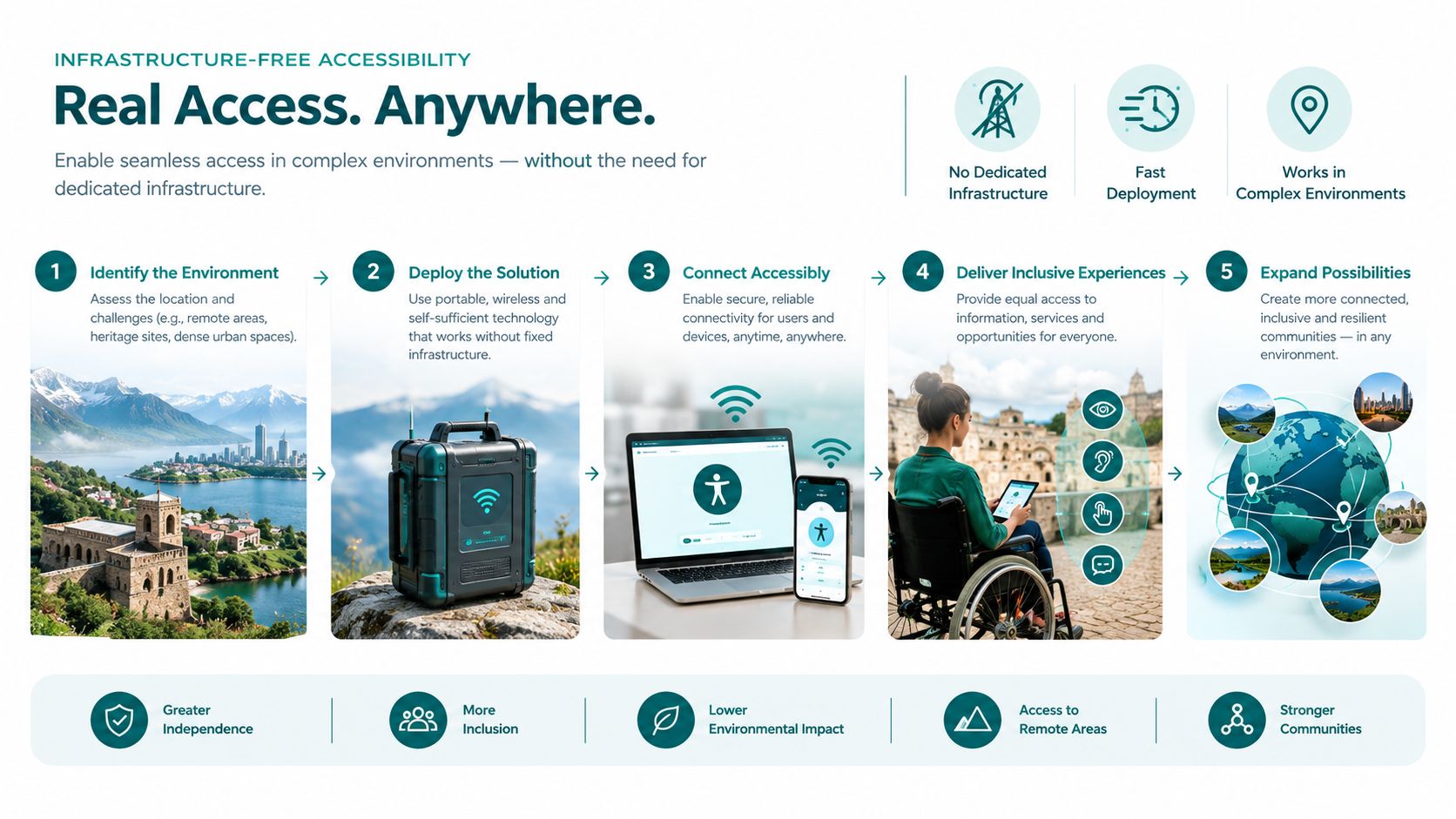
The operational value is clearest in complex places. A mapped route can direct a visitor to an accessible entrance, lift, platform, or point of interest, then be updated when the venue changes. Lord's Cricket Ground is the kind of environment where this distinction matters. Visitors may need precise guidance through entrances, concourses, and changing event layouts, while the operator needs to avoid installing and maintaining a separate hardware layer across the site.
This doesn't remove the legal duty to provide suitable physical access. Part M still concerns the building and its facilities, and the Equality Act still requires reasonable adjustments where a person would otherwise face substantial disadvantage. Infrastructure-free navigation addresses a different failure point, the gap between an accessible facility existing and a visitor being able to locate and reach it.
Teams designing inclusive services can also draw on resources about supporting SEN students online, particularly the principle that information should adapt to different ways of perceiving and interacting. In transport and venue settings, that means giving people usable instructions rather than assuming a sign, map, or staff member will always be available.
The GPS-free navigation approach shows why the last metre deserves separate attention. A route can be legally compliant on paper and still fail at the final turn, doorway, lift lobby, or platform entrance. Dynamic navigation turns that final connection into something an operator can maintain as part of normal service management.
Integrating Accessibility into Your ESG Strategy
Accessibility belongs in the Social pillar of ESG, but a credible programme also affects governance and operational resilience. Governance improves when leaders assign owners, record decisions, publish accessibility statements, involve disabled people in research, and monitor remediation. Operational resilience improves when teams can update route information and service content without waiting for a major construction project.
A strong ESG account should describe actions and evidence rather than rely on broad language. Report the scope of the estate, the services tested, the barriers found, the fixes completed, the issues still open, and the process for reviewing changes. Where physical and digital access intersect, explain how visitors receive current information about entrances, lifts, facilities, diversions, and alternative routes.
The ESG reporting requirements guidance can support that conversation, but the underlying discipline is straightforward. Accessibility reporting should help a decision-maker understand what changed for users and how the organisation will keep it working.
For Waymap's audiences, the business case is not limited to legal risk. Transit agencies, campuses, airports, stadiums, offices, and shopping centres also need a way to manage changing environments, reduce avoidable maintenance, and demonstrate that inclusive design operates beyond a policy document. The strongest programmes connect WCAG testing, Part M assessments, Equality Act decisions, user research, staff processes, and live wayfinding into one accountable operating model.
Waymap provides infrastructure-free navigation for indoor, outdoor, and underground environments, using smartphone motion sensors and detailed maps to guide people to precise entrances, lifts, platforms, and points of interest without GPS, Wi-Fi, or installed hardware. Visit Waymap to discuss how dynamic wayfinding can support your accessibility compliance programme and make changing venues more navigable.
