
User Adoption Strategies: For Transit, Campuses, & Venues
The pattern is familiar. A new wayfinding platform goes live across a station, hospital, campus, or retail estate. Communications teams send the launch email, front-line staff mention it for a week, and then usage stalls because passengers and visitors fall back to asking for help, following signage, or avoiding unfamiliar routes altogether.
For transit operators and large venues, that is not a marketing problem. It is an operational one. If people do not trust the tool on their first difficult journey, they rarely give it a second chance. That matters most in complex environments where GPS drops out, layouts change, and physical infrastructure still leaves gaps in independent access.
The scale of that access gap is well established. The UK disability population remains large, and blind and partially sighted travellers are a significant user group, so adoption cannot be treated as a nice-to-have feature request (ONS disability data). Operators are also working inside clear legal duties. In the UK, that means practical accessibility under the Equality Act 2010 alongside standards such as BS 8300, PAS 78, and BS EN 17210. In the US, transit agencies and venues are working against ADA requirements, including ADA Title III. The common thread is straightforward. Accessibility has to work in the physical spaces people use every day.
That is why generic user adoption advice tends to miss the point for this category. Infrastructure-free navigation succeeds or fails in live operational conditions. Underground stations, concourses, hospitals, arenas, and shopping centres all expose the same hard constraints: unreliable positioning, busy staff teams, mixed-language audiences, and estates that were not originally designed for equal independence. Named deployments such as WMATA matter here because they show adoption in a real transit context, not in a controlled demo.
I have seen the same trade-off repeatedly. Teams that treat launch as a software event get weak uptake. Teams that tie rollout to customer assistance, accessibility compliance, staff prompts, and measurable journey outcomes get sustained use.
That distinction matters even more for infrastructure-free systems. Waymap's precision navigation uses device-native motion sensors and detailed maps rather than GPS, Wi-Fi, or installed beacons. For operators, that changes the adoption case. The value is not only better positioning. It is lower hardware dependence, fewer maintenance implications, and a clearer path to deployment in stations, campuses, hospitals, and venues where installing and supporting beacon estates is expensive or impractical.
The ten strategies that follow focus on that reality: how venues and transit operators get people to use wayfinding tools consistently, in environments where accessibility duties, operational friction, and front-line execution decide the outcome.
1. How do you build internal support before rollout
The first failure usually happens in a conference room, not in the station or on the concourse. A wayfinding rollout gets approved as a customer experience tool, reviewed by accessibility as a compliance measure, questioned by estates as a maintenance risk, and stalled by operations because nobody has defined who owns it once it is live.
Internal support starts with that reality. Build the case by function, not by product category.
At WMATA, for example, the internal argument is not only about helping riders find their way. Operations leaders need to know whether the system will reduce avoidable staff interruption during service pressure. Accessibility leads need confidence that the service supports independent journeys in a way that aligns with ADA Title III obligations in public-facing environments. Estates and maintenance teams need a clear answer on hardware dependence, update cycles, and who carries the support burden if maps change. In large venues such as shopping centres, hospitals, and arenas, those same questions appear under different department names, but the decision logic is the same.
One deck rarely gets cross-functional approval. Decision-makers back rollouts when the proposal matches the friction they are already managing.
- Operations teams: Show what changes on the ground. Fewer repeated directional queries. Less reliance on staff escorts. Better coverage in complex indoor spaces where GPS is weak or unusable.
- Accessibility and compliance leads: Tie the rollout to equal access, independent use, and the operator's duty to provide effective access to services. In UK venues, that usually means connecting the proposal to the Equality Act 2010, BS 8300, and PAS 78. In US transit and venue settings, ADA Title III is often the starting point for the discussion.
- Finance teams: Explain the cost trade-off in plain terms. Infrastructure-free navigation removes the procurement, installation, battery replacement, and fault-checking cycle that comes with beacon estates. It does not remove the need for map maintenance, governance, or support, so say that upfront.
- Customer experience teams: Focus on measurable visitor outcomes. Faster route confidence. Fewer missed entrances, lifts, gates, or amenities. Better support for people who do not read the primary venue language or cannot rely on static signage.
- Estates and IT teams: Clarify what the platform needs from them, and what it does not. If the system works without installed hardware, say so clearly. If updates can be made through map and content changes rather than physical replacements, that matters.
This is also where weak business cases tend to collapse. Teams often present digital wayfinding as innovation. Operators fund it when it solves an operational problem, reduces a compliance risk, or improves an outcome they already report on. If you need a model for that reporting discipline, use a set of wayfinding retention and usage metrics before procurement, not after launch.
Private stakeholder interviews matter more than the main steering-group meeting. In one-to-one conversations, leaders usually reveal the primary blocker: unclear ownership, concern about map upkeep, budget timing, procurement complexity, or fatigue from a previous pilot that never became a service. Get those objections early and write them into the rollout plan.
Named deployments help because they answer practical doubts. "Works without Wi-Fi" is still too abstract for internal approval. "Works underground without installed hardware, supports detailed indoor routing, and allows venue managers to update points of interest without replacing physical infrastructure" is a clearer fit for transit agencies and large public venues.
Internal support is not consensus for its own sake. It is a documented operating model. Before rollout, every sponsor should be able to answer five questions without hesitation: who owns the service, who approves map updates, which compliance outcomes matter, which frontline teams will promote it, and which operational measures will be reviewed after launch. If those answers are still vague, the rollout is early.
2. Why phased pilots beat full-estate launches
At 8:00 a.m. on a Monday, a network-wide launch can fail in ways the procurement paper never captured. One station has incomplete lift data. Another has a renamed entrance. Frontline staff have not seen the user flow. Passengers hit the first bad journey, lose trust, and go back to asking staff or following signs that were already under strain.
A phased pilot contains that risk.
For transit operators and large venues, the better pattern is a time-boxed pilot in one station group, terminal, hospital block, or venue zone with real passenger volume and real edge cases. The point is not to prove the app works in perfect conditions. It is to test whether the operating model holds under live conditions: map updates, accessibility queries, staff handoffs, incident response, and repeat use.
WMATA's deployment is the right kind of reference point here because it shows what decision-makers need from a pilot. They need evidence that infrastructure-free navigation can work in a live transit environment without waiting for estate-wide hardware changes. That is a more useful test than a polished launch across every site on day one.
Set the pilot boundary before you discuss adoption
A pilot without a hard boundary usually turns into an argument about anecdotes. Define the area, define the user groups, define the success measures, and define the review date before launch.
For most operators, that means tracking a short list of outcomes tied to operations:
- Journey completion: Can users reach the correct platform, gate, clinic, desk, toilet, or exit without staff intervention?
- Staff deflection: Do customer service and security teams receive fewer routine directional questions in the pilot area?
- Repeat use: Do users come back after a successful first journey, or drop off after one attempt?
- Map quality issues: Which entrances, lifts, stairs, interchanges, and points of interest need correcting?
- Accessibility performance: Can disabled users complete routes that align with published accessible paths and on-site conditions?
That last point matters for more than user satisfaction. Under ADA Title III, many public-facing venues have clear obligations around equal access to services. A pilot should test whether the digital wayfinding service improves practical access, not just whether it generates downloads.
Full-estate launches make it harder to see where failure sits. If adoption is weak, nobody knows whether the problem is onboarding, route quality, staff behaviour, poor map data, or the wrong launch message. A phased pilot gives you cleaner evidence and a faster correction cycle.
It also forces a decision. Open-ended pilots usually lose energy because staff treat them as temporary and users sense that uncertainty. Set a fixed review point, decide what expands, what changes, and what stops.
Use the pilot period to build the support loop that will be needed at scale. Teams that want a practical model for that should look at end-user support in real-world navigation deployments. Adoption rises when route errors, user questions, and accessibility feedback are handled as operational inputs, not as post-launch noise.
The standard for success is simple. A pilot should show that people complete more journeys independently, staff spend less time on repetitive directions, and the service can be maintained without adding new infrastructure across the estate. If it cannot prove those points in one defined area, scaling it wider usually multiplies the same problems.
3. Why staff training changes adoption more than marketing
A passenger is standing at a barrier with two minutes before departure. They ask the nearest member of staff for Platform 7. In that moment, adoption is decided by the reply they get, not by the campaign that introduced the app three weeks earlier.
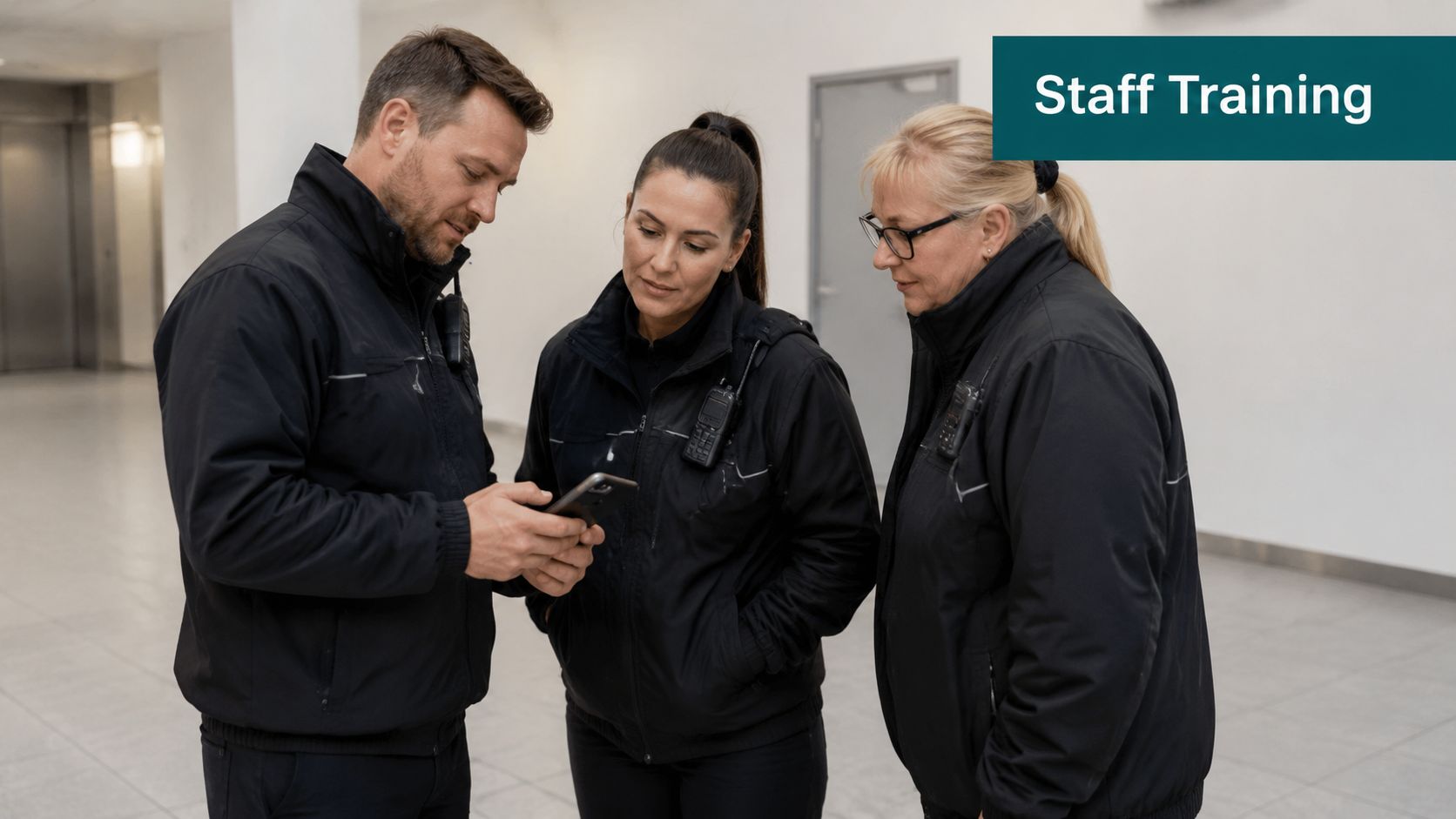
In stations, hospitals, airports, and large venues, frontline staff are the credibility layer. If customer service agents, security teams, concierges, gate staff, and help-desk teams do not actively recommend the wayfinding tool, many visitors will default to asking for directions, following crowds, or giving up. That is an operational issue, not a brand issue.
Train for the user journey, not the feature list
Product briefings often fail because they teach menus and buttons instead of real interactions on the floor. Staff need to know what to say under time pressure, with background noise, queues building, and users who may already be stressed or disoriented.
Train teams to handle three common moments:
- A direct location question: “How do I get to Platform 7?” or “Where's the accessible toilet?”
- A confidence problem: “I don't want to get lost underground.”
- An accessibility need: “I need audio guidance” or “I can't rely on signs.”
The script matters. A good script does not dump every feature. It gives staff one clear recommendation, one reason to trust it, and one threshold for stepping in with manual help. That is especially important in environments covered by accessibility duties such as ADA Title III, where the ultimate test is whether people can access services independently, not whether staff can describe the app accurately.
I have seen teams get better results from a 20-minute role-based briefing than from a polished launch campaign. The trade-off is simple. Marketing can create awareness at scale. Training changes behaviour at the exact point where a visitor decides whether to trust the system.
Staff confidence also depends on understanding why the tool works in places where GPS and signal-dependent systems often fail. For infrastructure-free wayfinding, that means explaining the operating model in plain language: phone sensors, detailed venue maps, reliable turn-by-turn guidance, and no dependency on new beacons across the estate. The principles behind that approach are set out clearly in these inclusive design principles for navigation systems.
Operationally, training should answer four questions:
- When should staff recommend the app first?
- Which users are likely to benefit immediately, including blind and low-vision passengers and visitors unfamiliar with the site?
- What should staff do if the user cannot complete onboarding alone?
- When should staff stop promoting the tool and give direct assistance instead?
Those thresholds matter. If staff push the app in the wrong situations, trust drops fast. If they never recommend it, adoption stays low and staff continue absorbing repetitive direction requests that the system was meant to reduce.
We've covered practical support patterns in our piece on end-user support in real-world navigation deployments.
The training question is whether staff know when to recommend it, why it works, and when to step in manually.
4. Why accessibility-first messaging drives stronger adoption
If you position wayfinding as a convenience add-on, many users treat it as optional. If you position it as a practical accessibility tool that also improves the experience for everyone else, adoption gets much stronger traction.
That isn't a branding preference. It reflects who needs reliable navigation most urgently and who is often excluded by standard digital onboarding. Waymap was built first for blind and low-vision users, and that changes how we think about adoption. The first successful experience isn't completing a welcome tour on screen. It's independently reaching the right entrance, clinic, platform, lecture hall, or gate.
Work with communities that already hold trust
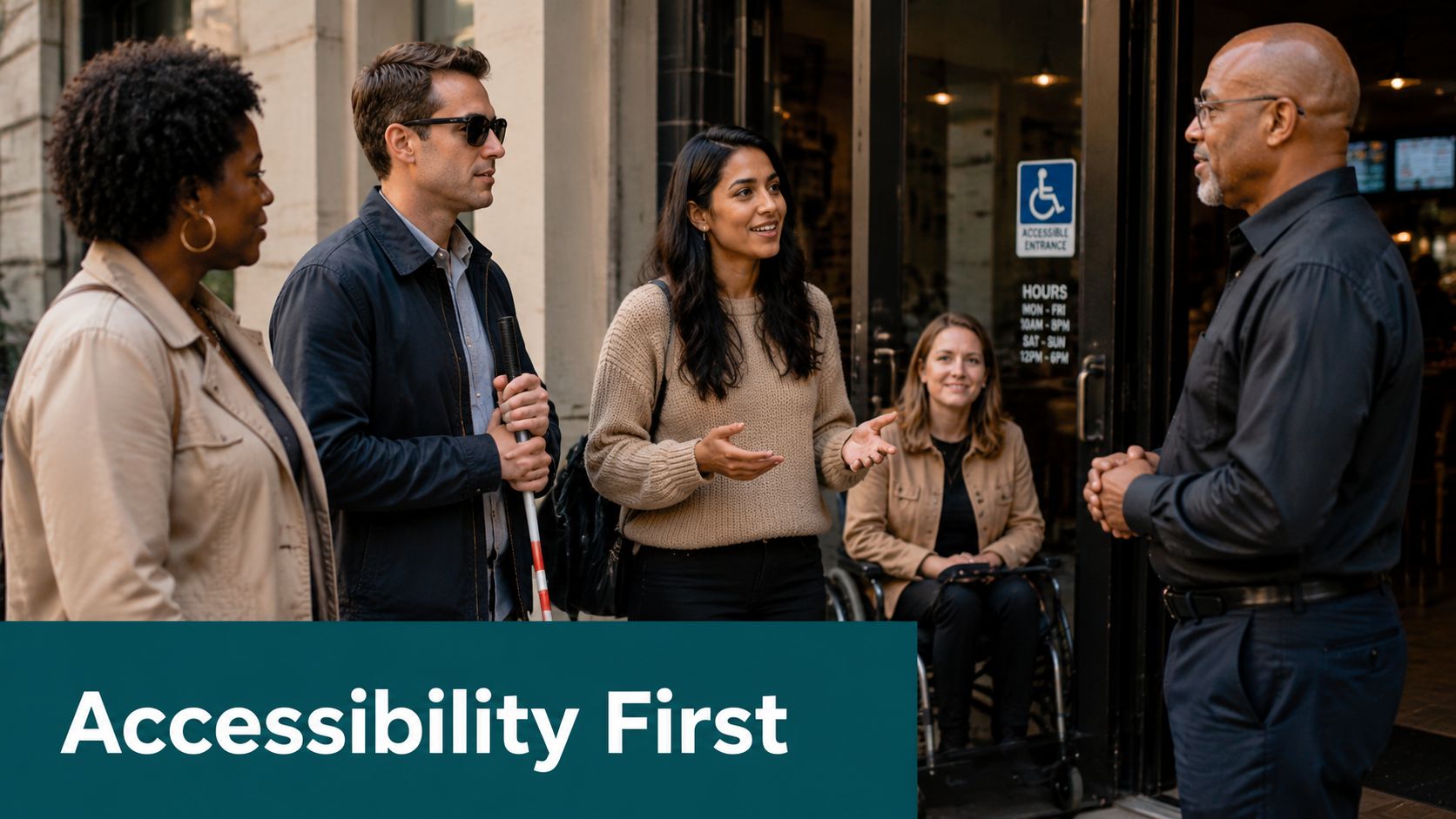
Community partnerships do what marketing can't. Local blind and low-vision groups, disability councils, patient advocacy networks, and accessible travel organisations bring lived scrutiny. If they support the rollout, users notice.
This is one reason founder-led credibility matters. Dr Tom Pey's perspective as a blind accessibility technologist isn't a brand asset in the abstract. It's evidence that the product was shaped by the navigation problem itself. The Waymap view on inclusive design principles explains why this matters operationally, not just ethically.
The demand is also clear. RNIB reported in 2024 that when wayfinding solutions were integrated with real-time accessibility data such as lift status and ramp availability, adoption rates for disabled commuters increased by 68% compared with static signage-only environments (RNIB accessibility data findings). That's a strong signal for transit operators and major venues. Adoption rises when the product reflects real barriers, not just map geometry.
Use partnerships to co-host demos, beta sessions, and launch communications. In practice, that often works better than paid awareness campaigns because it starts from a trusted problem statement. “This finally helps people travel independently” lands harder than “Download our new venue app.”
5. How do you stop adoption dropping after launch
Monday morning at a major station, one lift is out, a retailer has changed units, and a temporary barrier has pushed passengers through a different corridor. If the app still sends people the old way, trust drops on the first bad journey.
Post-launch retention is decided by operating discipline. In transit and large venues, adoption falls when route data, points of interest, and instruction wording stop matching the live environment. For operators with ADA Title III duties and comparable access obligations in other jurisdictions, that is not just a product issue. It affects whether disabled passengers and visitors can rely on the service in practice.
Run a visible feedback-to-update cycle
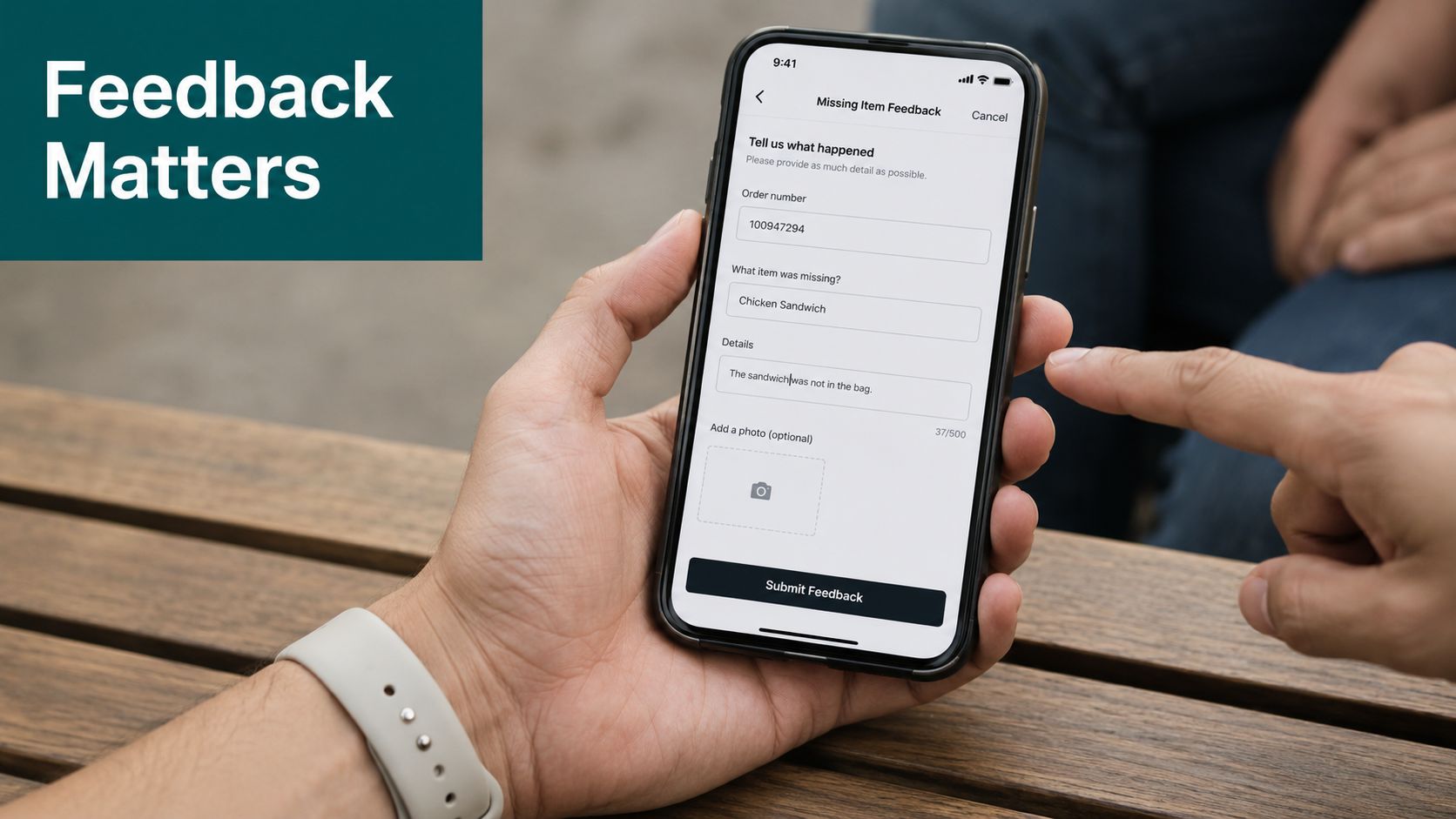
Users need a fast way to report blocked routes, closed lifts, missing entrances, renamed retailers, moved departments, and unclear instructions. Frontline staff should log repeat questions at ticket halls, reception desks, and concierge points. Those questions often show the failure before analytics do.
A workable rhythm is simple:
- Weekly review: Check recurring issues from users, control teams, and frontline staff.
- Prioritisation by impact: Fix routes tied to accessible toilets, lifts, platforms, clinics, and main entrances before low-traffic destinations.
- Published changes: Tell users what changed and when.
- Fast acknowledgement: Confirm receipt, ownership, and expected review time.
The point is visibility. Silent fixes improve the product. Visible fixes improve trust.
As noted earlier, poor wayfinding can cause people with accessibility requirements to abandon a trip altogether. That is why first-journey failure matters so much. In my experience, once a disabled passenger has been misrouted around a closed lift or sent to the wrong entrance, reacquiring that user is far harder than winning the initial download.
Waymap's infrastructure-free model changes the operating burden. Teams can update the digital layer without replacing hardware, recalibrating a beacon estate, or sending technicians across the site. In venues with frequent tenant churn, event-mode routing, pop-up security perimeters, or hospital department moves, that shortens the time between reported issue and corrected journey. WMATA and similar large-network deployments make the lesson clear. Retention depends on whether the service keeps pace with operational change.
Operators should also separate retention work from acquisition work. Download campaigns create interest. Retention comes from fewer failed journeys, faster corrections, and clear proof that user reports lead to updates. If you want a structured model for motivating repeat referrals after those early wins, these high-ROI referral rewards programs are a useful contrast. The same principle applies here. Reward and reinforce behaviour that reflects successful use, not just initial curiosity.
6. When should you use early-adopter incentives
A rider at a familiar station will not change behaviour because you offered a prize draw. They will change it if the first use saves time, removes uncertainty, or helps them avoid a failed journey. That is the standard for incentives in transit and large venues.
Use early-adopter incentives when the service already works, staff can explain it, and the venue can support the first wave of questions. Use them to speed trial in places where existing habits are strong, such as commuter rail, hospitals, airports, campuses, and shopping centres. Do not use them as a substitute for route accuracy, accessible onboarding, or clear operational ownership.
The practical goal is behaviour shaping, not download inflation. For operators, that means rewarding actions tied to service value and measurable outcomes:
- First completed journey: Confirm that a user reached a meaningful destination through the wayfinding tool.
- Repeat use within a short window: Show that the service fits real travel patterns, not one-off curiosity.
- High-quality issue reports: Encourage reports on missing POIs, inaccessible entrances, temporary closures, or incorrect lift status.
- Structured user feedback: Give early users a defined way to help improve coverage before wider rollout.
That approach fits the operating reality of infrastructure-free navigation. If the platform can be updated quickly as layouts, closures, and access conditions change, incentives can help operators build a reliable feedback loop early. In practice, that is more useful than offering generic rewards for installs, because it produces data the venue can act on.
There is also a compliance angle. Under ADA Title III, public-facing venues have obligations around accessible access and effective communication. Incentives should never pressure disabled users to test an immature service in place of staffed assistance or established accessible routes. The safer approach is to reward verified successful use after the experience is already dependable, and to keep conventional assistance channels available throughout the pilot and early rollout period.
The incentive itself does not need to be expensive. Priority access to new features, transit account credits, campus recognition schemes, or retailer loyalty tie-ins can all work if the reward is immediate and simple to claim. I have seen complicated points structures fail for a predictable reason. Frontline teams stop mentioning them, and users do not understand what they are getting.
One caution matters more than the reward design. If a blind passenger is sent to the wrong entrance, or a visitor is routed around a lift that is out of service, no voucher will fix that loss of trust. Incentives amplify a good operational service. They do not rescue a weak one.
For operators building referral mechanics around those early successful journeys, this overview of high-ROI referral rewards programs is a practical reference.
7. Why multilingual and accessible onboarding decides the outcome
A visitor arrives at an unfamiliar station, the lift they expected is out of service, the concourse is noisy, and English is not their first language. In that moment, onboarding is not a set of welcome screens. It is the first minute in which the system proves it can guide someone to the right place without adding delay, confusion, or dependence on staff.
That standard matters more in transit and large venues because the user is already under pressure. Blind and low-vision passengers, older visitors, people with limited English, and anyone moving through a hospital, campus, airport, or interchange will judge the service on one thing first. Can it get me somewhere that matters, clearly and safely, on the first attempt?
For infrastructure-free wayfinding, onboarding should mirror the live journey. Use short spoken instructions, clear destination labels, and a first route that solves a real task. Good starting points include an information desk, clinic reception, platform access point, accessible toilet, customer service desk, or a main entrance users need to find again later. Operators planning these journeys across sectors can review relevant wayfinding deployment use cases.
Accessibility is also a compliance issue, not just a product choice. Under ADA Title III, public-facing venues must provide effective communication and equal access to services. If onboarding depends on small text, complex gestures, or sustained screen attention in a crowded environment, the venue is creating avoidable barriers at the exact point where trust is either built or lost.
As noted earlier, user preference research points in the same direction. People respond better to heads-up, hands-free guidance than screen-led instruction in active environments.
Language support needs the same operational discipline. Professional translation is the baseline, but it is not enough on its own. Destination names need to match venue signage, public announcements, and staff terminology. If the app says "north concourse" while station staff say "upper hall," users hesitate, and hesitation is where confidence drops.
Test audio prompts in the acoustic conditions users will face. A translation that reads well on a script can fail on a crowded platform, in a reverberant atrium, or beside escalators and service vehicles. The right benchmark is intelligibility under venue noise, not correctness on a desktop review.
The practical measure is simple. Track whether first-time users complete an onboarding journey without staff intervention, wrong turns, or abandonment. If that number is weak in one language group or among users relying on audio guidance, the onboarding flow needs work before wider promotion.
8. What marketing message actually gets people to use wayfinding
A passenger steps off a train into an unfamiliar interchange, sees no mobile signal, and needs the correct lift and platform in under five minutes. A sign telling them to "download our venue app" does not answer that problem. A message like "Find the right platform underground" does.
The message has to match the operational reality of the site. In transit and large venues, people decide fast whether a tool is worth their attention. They respond to a specific outcome in a specific setting, especially where GPS is unreliable, routes change, and missing a turn has a real cost.
Promote the job to be done
Good wayfinding messages describe the task users need help with, not the software category.
- Transit hubs: Find the correct platform, exit, lift, or interchange underground.
- Hospitals: Reach the right clinic, reception desk, or imaging department without detours.
- Shopping centres: Find a named store, accessible toilet, lift, or parking route.
- Campuses: Get to the right building or lecture hall on a first visit.
- Airports: Reach security, gates, toilets, and assistance points with less uncertainty.
That framing also aligns better with how operators buy and deploy these systems. They are not promoting an app for its own sake. They are reducing missed connections, late arrivals, repetitive staff queries, and avoidable accessibility barriers under obligations such as ADA Title III.
Claims should stay concrete. Use language users can test for themselves, such as "works underground," "guides you to the right entrance," or "find the nearest accessible route." Avoid broad promises about innovation or convenience. In practice, those lines underperform because they sound like brand copy, not operational help.
I have seen the strongest uptake when the message names three things clearly. The place. The task. The constraint. "Find your platform underground." "Get to the outpatient clinic without asking for directions." "Use the accessible entrance that is open."
For operators comparing messaging by setting, these wayfinding use cases across transit, healthcare, retail and campuses show how the same system should be presented differently depending on the journey.
One rule holds across every venue type. Say what the tool helps the user do in that building, on that trip, under real conditions. That is the message people act on.
9. How do you get staff to keep promoting the system
Staff don't keep recommending a tool because leadership says it matters. They keep recommending it when they can see that it reduces friction in their own work.
That means adoption reporting has to be visible and relevant. Frontline customer service teams care about fewer repetitive location questions. Facilities teams care about lower maintenance burden. Accessibility leads care about documented improvements in independent navigation. Visitor experience teams care about complaints and satisfaction.
Show the metrics that matter to each team
The report doesn't need to be complex. It does need to be specific enough that teams can connect the platform to their own outcomes.
Useful monthly reporting usually includes:
- Active users and completed journeys: To show whether use is rising or stalling.
- Top destinations: To reveal where wayfinding demand is highest.
- Repeated manual queries: To identify where staff are still filling map gaps by hand.
- Accessibility and complaint signals: To show impact beyond downloads.
There's strong evidence for making this visible. The UK Equality and Human Rights Commission reported in 2023 that venues implementing dynamic digital wayfinding layers saw a 42% reduction in customer complaints related to navigation difficulties (EHRC digital wayfinding complaint reduction). If that result is happening but staff never see it, you're missing one of the strongest internal adoption levers you have.
This is also where organisational adoption matters. Venue managers and operators are administrators, not just sponsors. They need to use the backend, update points of interest, and keep the map current. If the public adopts the app but the venue team doesn't adopt the operating model behind it, quality falls and trust drops with it.
A short dashboard shared consistently beats a dense quarterly report nobody opens.
10. Why co-design with disabled users produces stronger adoption
Accessibility-first user research isn't a compliance ritual. It is product development. If blind, low-vision, mobility-impaired, and neurodivergent users aren't involved early and continuously, the team will miss problems that sighted or non-disabled testers often don't notice.
That applies to route logic, wording, pacing, audio timing, handoff moments, error handling, and what counts as a useful landmark. It also applies to confidence. A route can be technically correct and still feel unusable if the guidance is vague at the moment the user needs certainty.
Test in the real environment
Labs don't reproduce crowded ticket gates, shifting hospital reception patterns, construction diversions, event-mode routing, or the noise profile of a shopping centre at peak time. Real settings do.
The demand for this is obvious. RNIB's 2024 work noted that 2.2 million people in the UK are registered as blind or partially sighted, including 1.6 million aged over 65, a group with high need for physical navigation assistance and low tolerance for complex digital interaction (RNIB blindness and low vision profile). If your adoption strategy doesn't start with their needs, it's not addressing one of the clearest navigation use cases in the market.
Waymap's development has been shaped by exactly this type of co-design, which is one reason our product approach centres on audio guidance, adaptive stride learning, and infrastructure-free precision navigation rather than visual-first interaction patterns. We've written more about this in our piece on customer journey mapping for real-world navigation.
Co-design works because it replaces assumptions with route-level evidence. Users don't just tell you what they prefer. They show you where the product breaks.
Treat those users as expert contributors. Compensate them properly, test repeatedly, and publish the changes their input drives. That's how research improves both product quality and trust.
10-Point Comparison of User Adoption Strategies
| Strategy | 🔄 Implementation complexity | ⚡ Resource requirements | 📊 Expected outcomes (⭐) | Ideal use cases | 💡 Key advantages |
|---|---|---|---|---|---|
| Stakeholder mapping and early advocacy | High, cross‑department coordination and advocacy | Low capital, high time investment (meetings, tailored business cases) | Smoother approvals, internal champions; ⭐⭐⭐⭐ | Transit agencies, large venues, universities before rollout | Aligns departments, reduces capital/maintenance objections |
| Phased rollout with measurable venue‑level pilots | Medium, pilot design, metrics, iteration cycles | Moderate: project leads, analytics, recruited pilot users | Data-driven improvements, measurable adoption lift; ⭐⭐⭐⭐ | High‑traffic lines, terminals, shopping centre wings | Risk reduction, faster subsequent rollouts via real data |
| Staff training and operational integration | Medium, role‑specific training and system integration | Moderate ongoing: trainers, scripts, refresher sessions | Higher staff advocacy; 2–3x adoption where integrated; ⭐⭐⭐ | Customer service, security, concierges in transit/venues | Converts staff into promoters, reduces manual wayfinding queries |
| Accessibility‑first positioning and community partnerships | Medium, authentic engagement and sustained outreach | Low–moderate: partnership management, advocacy comms | Credibility with disability communities; sustained adoption; ⭐⭐⭐⭐ | Hospitals, transit, venues focused on ESG/accessibility | Builds trust, word‑of‑mouth, strengthens compliance credentials |
| User feedback loops and continuous map improvement | Low–Medium, feedback channels + update cadence | Moderate: map editors, QA, triage process | Faster fixes, reduced churn, visible responsiveness; ⭐⭐⭐⭐ | Retail centres, airports, networks with frequent changes | Rapid accuracy improvements; users see impact of reports |
| Incentivized early‑adopter programs | Low, program setup and reward mechanics | Moderate: incentive budget, program ops, marketing | Accelerates critical mass; 2–3x faster adoption; ⭐⭐⭐ | Transit loyalty programs, shopping centres, universities | Quick engagement and word‑of‑mouth via tangible rewards |
| Multilingual and accessible onboarding | Medium, localization and audio-first design | Moderate: translators, audio production, QA testing | Higher first‑use success; up to 3x adoption in diverse venues; ⭐⭐⭐⭐ | International airports, multicultural campuses, city malls | Removes language/access barriers, builds trust on first journey |
| Venue‑specific feature highlighting & use‑case marketing | Low–Medium, tailored content per venue type | Moderate: copy/design, channels, testing | Higher download→active conversion; 2–4x uplift; ⭐⭐⭐⭐ | All venues, especially commuter hubs and retail centres | Speaks to specific user pain points; differentiates from legacy apps |
| Staff incentive alignment & adoption metrics visibility | Medium, dashboarding and KPI alignment | Moderate–High: data integration, reporting, incentive budgets | Strong staff buy‑in; 3–5x faster adoption when aligned; ⭐⭐⭐⭐ | Large transit hubs, shopping centres, airports | Creates staff ownership, measurable ROI and momentum |
| Accessibility‑first user research and co‑design | High, continuous recruitment, testing, product changes | High: participant compensation, research time, product iterations | Deep adoption gains among blind/low‑vision users; 40–60% lift; ⭐⭐⭐⭐⭐ | Products built for accessibility, early‑stage pilots | Reveals critical edge cases, builds deep trust and advocacy |
Frequently Asked Questions on Wayfinding Adoption
What are user adoption strategies?
A station launches a new wayfinding app, posters go up, downloads spike for a week, and frontline staff still spend the morning explaining how to reach Platform 4, the accessible toilet, or the nearest exit lift. That is the ultimate test of adoption. In transit and large venues, adoption means people use the system reliably enough to change operations, reduce confusion, and improve access.
User adoption strategies are the policies, rollout choices, training plans, and feedback loops that make that happen. For venues and operators, the work usually includes stakeholder alignment before launch, phased pilots, staff training, accessible onboarding, map governance, and post-launch monitoring. The objective is not awareness on its own. The objective is repeat use on real journeys.
For infrastructure-free navigation, the operating model matters even more. If maps drift out of date, if staff do not trust the guidance, or if disabled passengers encounter one failed journey early on, adoption stalls quickly. In practice, the strongest programmes tie product performance to operational outcomes such as fewer wayfinding queries, better journey completion, and stronger compliance with accessibility obligations, including ADA Title III in public-facing venues.
Industry reviews have also shown a clear pattern. Venues that deploy app-based wayfinding well tend to see stronger engagement when the service is accurate, accessible, and integrated into day-to-day operations, not treated as a side project (Centre for Accessible Environments audit).
How do you measure user adoption for a navigation app?
Measure adoption at three levels. Start with usage, then confirm journey success, then check whether operations changed.
Usage metrics include downloads, active users, repeat sessions, and download-to-active conversion. Those figures matter, but they are only the first layer. For transit operators and large venues, the more useful metrics are route start rate, route completion rate, successful arrival at the correct entrance or platform, and the share of journeys completed without staff intervention.
Operational measures often decide whether a rollout keeps budget support. Track changes in wayfinding-related help desk requests, customer service contacts, accessibility complaints, and dwell time in known problem areas. If the app is installed but passengers still ask the same questions at the same locations, adoption has not reached operational significance.
London gives a useful practical reference point. As digital customer information improved across the network, passenger expectations shifted toward real-time, journey-specific guidance rather than static information alone. The lesson for operators is straightforward. Adoption rises when the guidance is current, relevant, and trusted.
Why do user adoption strategies often fail in large venues?
They usually fail because ownership is unclear and the service is treated like a communications campaign instead of an operating service.
Common failure points are familiar. Staff are not trained to recommend the tool. Onboarding assumes strong digital confidence. Maps are not updated after refurbishments, closures, or tenant changes. Marketing promises more precision than the product can deliver. In hardware-heavy systems, beacons or other installed components add maintenance overhead that estates teams cannot sustain across a large portfolio.
Trust is fragile in this category. A blind or low-vision user who is misrouted once may not give the app a second chance. That is why generic launch messaging underperforms in accessibility-led deployments. Operators need accurate mapping, a clear escalation path for defects, and frontline teams who know when and how to recommend the service.
There is also a governance issue. If no one owns content updates, accessibility review, and adoption reporting after go-live, usage drops. The app remains in the app store, but it stops influencing real journeys.
How does infrastructure-free navigation affect user adoption?
Infrastructure-free navigation changes adoption because it removes a major operational barrier. The venue does not need to maintain installed beacons, depend on patchy indoor GPS, or wait for hardware replacement before fixing coverage gaps.
That matters in rail, airports, hospitals, campuses, and shopping centres where layouts change often and underground or indoor environments break conventional positioning tools. A smartphone-based system that uses onboard sensors and well-maintained digital maps can support guidance across indoor, outdoor, and underground spaces within one service model. For operators, that usually means faster updates, lower maintenance complexity, and fewer single-point failures tied to physical infrastructure.
It also changes the accessibility case. Users adopt navigation tools when they trust them on the hardest journeys, not the easiest ones. If the system can guide a passenger from street to concourse to platform entrance with consistent accuracy, adoption grows through repeat success. Named deployments such as WMATA have shown why operators are moving toward digital accessibility tools that work across complex estates and support independence at trip level, not only at site level.
For decision-makers, the trade-off is straightforward. Infrastructure-free systems shift cost and effort away from hardware upkeep and toward map quality, QA, and staff readiness. In my experience, that is usually the better trade in large public venues because those activities improve both compliance and day-to-day service. It also aligns more closely with the requirements operators face under accessibility rules and public service standards.
If you're responsible for adoption in a station, hospital, campus, shopping centre, stadium, or public venue, Waymap can help you move beyond launch-day metrics and build lasting use. We deliver precision navigation indoors, outdoors, and underground without GPS, Wi-Fi, or installed hardware, so your teams can improve accessibility, reduce maintenance burden, and give people reliable guidance to exact doors, platforms, and points of interest.
