
Smart City Expo World Congress 2026: Your Guide

If you're responsible for a station estate, a civic campus, a shopping centre, or a major public venue, the brief probably looks familiar. Cut running costs. Improve accessibility. Show progress on ESG. Modernise customer experience. Avoid another expensive system that needs hardware, maintenance visits, and a fresh business case every budget cycle.
That combination is exactly why the Smart City Expo World Congress matters. The event isn't useful because it's large. It's useful because it brings policy, procurement, operations, and technology into the same room. For UK leaders, that creates a rare chance to test ideas against real operational constraints rather than polished sales narratives. If you're weighing smart buildings, connected infrastructure, and digital wayfinding, Waymap's view on IoT and smart buildings in practice is a useful companion lens before you go.
Your Essential Guide to the Smart City Expo World Congress
A transport authority team might arrive in Barcelona with one problem statement and leave with three. The original issue may be passenger navigation in complex interchanges. Then the conversation widens to accessibility obligations, energy use across the estate, maintenance burden, and whether any proposed system can survive procurement scrutiny.
That is the right way to think about the Smart City Expo World Congress. It isn't just a showcase of urban technology. It's a working market for city leaders, operators, and venue teams trying to solve connected operational problems without creating new ones.
What tends to work at this event is a disciplined filter. Start with the problem, not the product category. If you go looking for “smart city tech”, you'll get a lot of theatre. If you go looking for lower-maintenance accessibility delivery, better estate intelligence, or a credible route to inclusive visitor experience, the event becomes far more valuable.
Practical rule: the best meetings at SCEWC start with an operational constraint. Budget cap, maintenance limit, accessibility duty, retrofit complexity, or procurement timing.
For UK organisations, that matters because the same project often has to satisfy multiple internal audiences at once. Estates wants fewer physical assets to maintain. Accessibility leads want inclusive journeys, not just compliant signage. Sustainability teams want solutions that don't add unnecessary infrastructure. Finance wants a path that doesn't lock the organisation into constant replacement cycles.
Smart City Expo works best when you treat it as a decision environment, not a conference trip. Done properly, it helps you rule out poor-fit systems quickly and identify the small number of approaches that can survive contact with operational settings.
What Is the Smart City Expo World Congress?
A UK council lead, station operator, or venue director usually arrives in Barcelona with a familiar brief. Improve access, cut estate complexity, satisfy ESG reporting, and avoid buying hardware that creates a new maintenance problem six months later. That is the practical context in which the Smart City Expo World Congress matters.
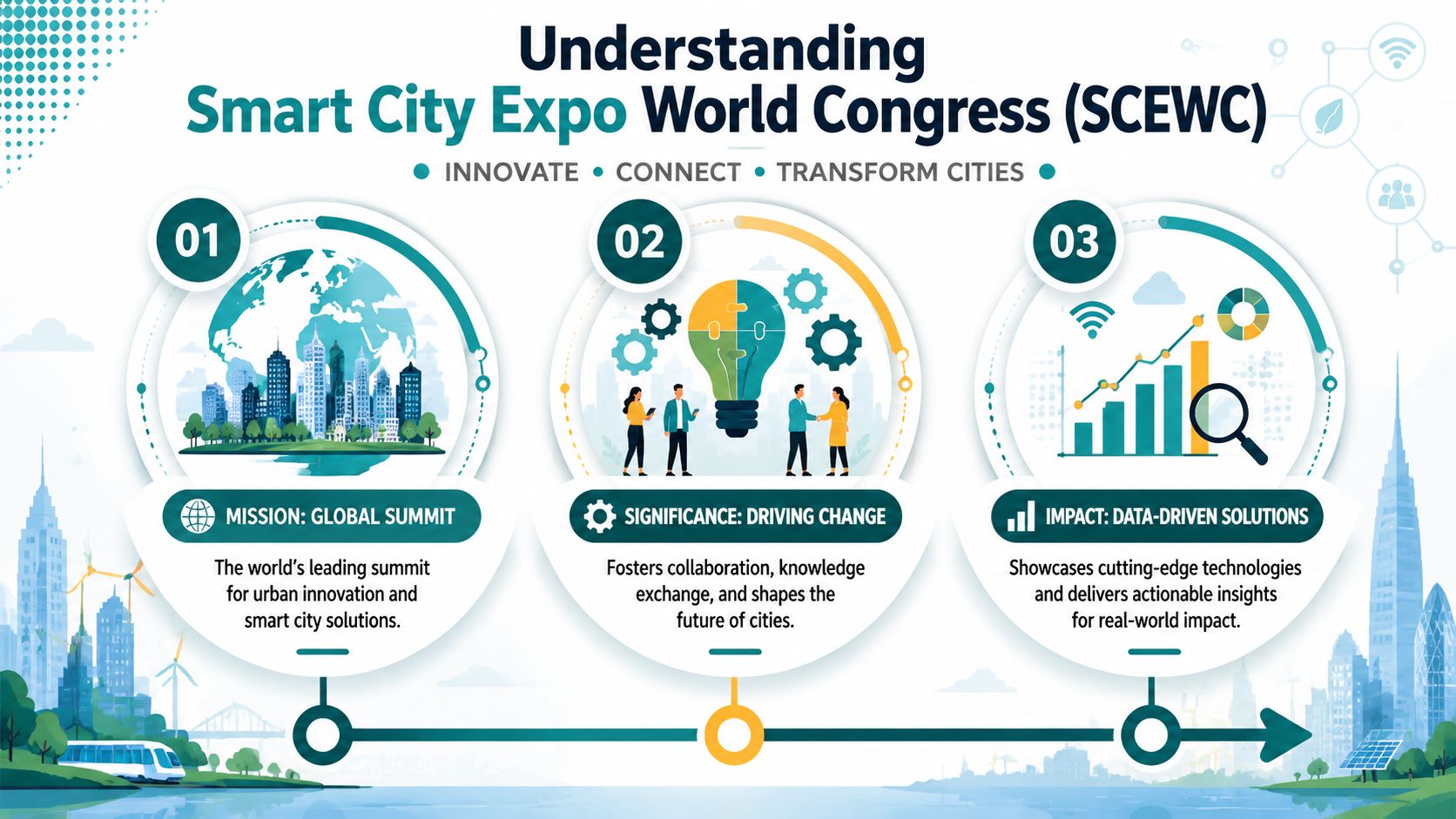
The Smart City Expo World Congress is a yearly three-day congress and exhibition in Barcelona organised by Fira Barcelona. It brings together city authorities, public bodies, operators, suppliers, investors, researchers, and policy teams around urban systems, infrastructure, mobility, governance, and digital services. In practice, it is one of the few events where strategy, procurement, operations, and regulation meet in the same room.
It has been running since 2011, and the 2026 edition will take place from 3 to 5 November in Barcelona.
Why the event carries weight
The event is large enough to be useful as a market check, not just a thought-leadership exercise. You can compare platform vendors, mapping providers, digital twin firms, accessibility specialists, transport operators, venue technology teams, and public-sector buyers over a few days instead of stretching the work across months of separate meetings.
That scale matters for UK organisations facing hard trade-offs.
Accessibility leads need solutions that improve the user journey, not just the audit trail. Estates teams want fewer physical assets and lower maintenance exposure. Sustainability teams want options that reduce unnecessary kit, power use, and replacement cycles. Procurement wants evidence that a supplier can cope with retrofit conditions, governance requirements, and mixed estates.
SCEWC is useful because those pressures show up quickly in conversation. A product that depends on heavy new infrastructure, perfect connectivity, or constant recalibration usually starts to look less convincing once operators ask detailed questions.
What the Smart City Expo World Congress is really for
For public-sector and venue practitioners, the congress does three jobs well.
- It helps teams benchmark categories properly. You can see which offers are mature enough for live environments and which are still built around demos.
- It exposes operational weak points early. Retrofit difficulty, hardware dependence, accessibility gaps, data ownership, and support demands tend to surface fast.
- It shortens the path to implementation insight. Useful conversations often come from operators and deployment partners explaining what worked in busy, constrained environments.
That last point matters more than many first-time attendees expect. A polished stand rarely tells you what a system costs to maintain across stations, concourses, public buildings, and event spaces. Conversations with teams dealing with live passenger or visitor flows do.
For transport and venue leaders, that is why examples from live rail transport wayfinding and navigation environments are more valuable than broad claims about connected cities. The practical question is usually simple. Will this approach improve journeys, stand up to procurement scrutiny, and remain affordable to run?
That is what the Smart City Expo World Congress is for at its best. It gives decision-makers a concentrated place to test whether an idea can survive policy, operations, accessibility duties, and budget reality before it reaches the pilot stage.
Who Should Attend the Smart City Expo?
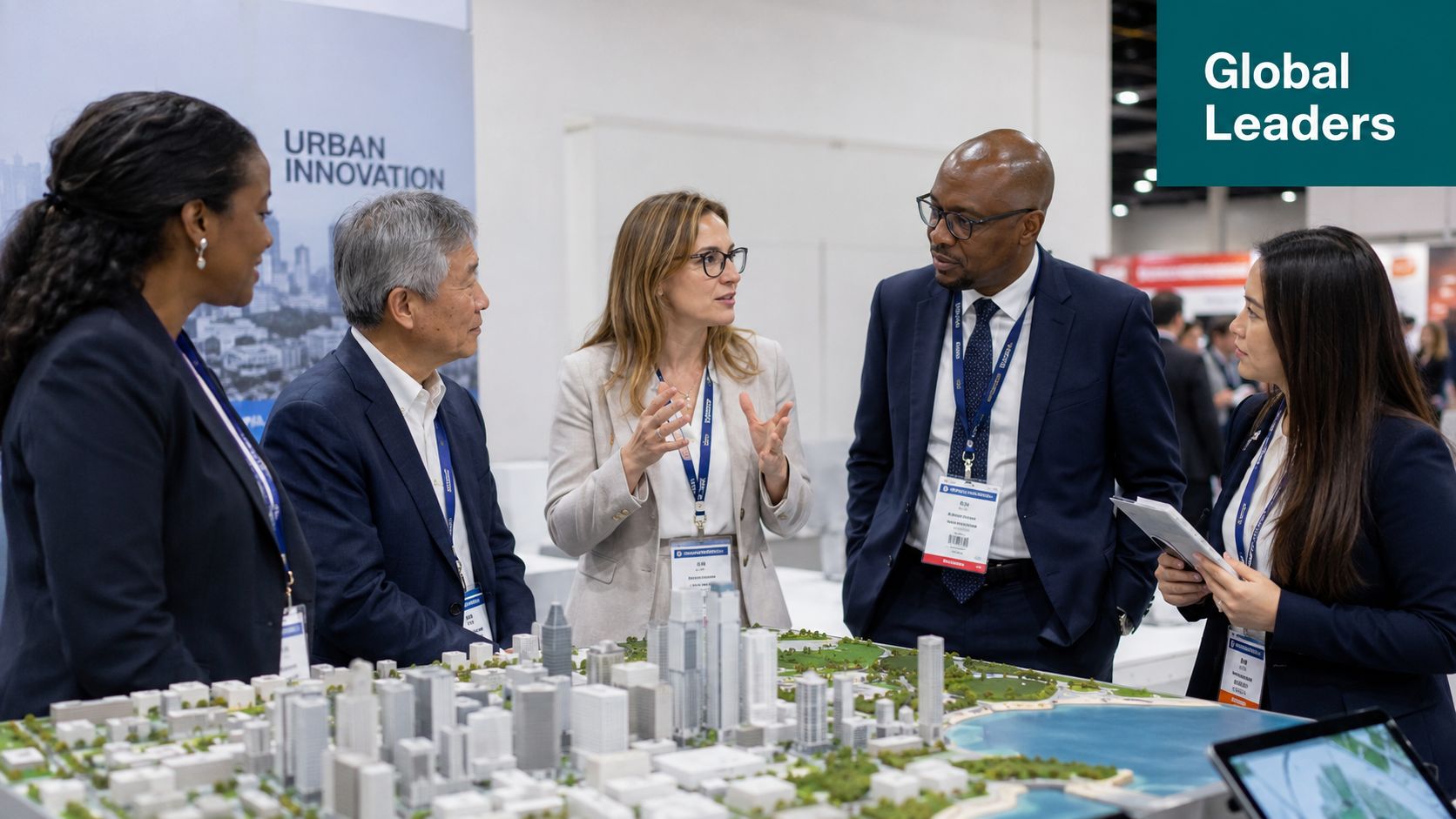
A council team preparing an accessibility upgrade, a rail operator under pressure to improve passenger confidence, and a venue group facing ESG scrutiny can all walk the same halls and leave with very different answers. The people who get value from the congress are the ones arriving with a live operational problem to solve, not a general interest in urban innovation.
Public-sector and transport leaders
Transport authorities, station operators, network planners, local authority officers, and procurement leads should attend when a decision is approaching and the risk of choosing the wrong model is high. The strongest use case is pre-procurement. Teams can test whether a supplier understands constrained sites, changing layouts, mixed user needs, and the approval burden that comes with public money.
For rail and metro organisations, the hard part is rarely the app interface. It is maintaining journey continuity across platforms, concourses, interchanges, and surrounding streets that may sit under different operational control. That is why examples from live rail transport wayfinding and navigation deployments are more useful than polished claims about connected mobility.
This matters in the UK context. Equality duties, retrofit constraints, data governance, and long asset lives all shape what can be adopted.
Venue and estates managers
Venue leaders should be in the room too. Airports, stadiums, universities, hospitals, arenas, and retail estates deal with the same practical question. Will this improve the visitor journey without adding another estate-wide hardware burden to install, maintain, and replace?
That shifts the conversation fast.
| Role | What they're actually evaluating |
|---|---|
| Estates manager | Installation burden, maintenance load, retrofit complexity |
| Venue operations lead | Visitor flow, service consistency, day-to-day resilience |
| Accessibility lead | Inclusive access beyond minimum compliance |
| Commercial director | Experience quality, reputation risk, repeat visits |
In practice, the best conversations for this group are about upkeep, not features. How often do maps need updating? Who handles route changes during events or works? What fails when connectivity drops, staffing is thin, or a temporary closure changes footfall patterns? Expensive hardware can look convincing on a stand and become a headache once the estate team inherits it.
Sustainability and governance teams
Sustainability leads, ESG managers, digital directors, accessibility specialists, and information governance teams have a clear reason to attend. Many smart city projects fall apart because the operational model is weak. The technology may work, but the ownership model, support demand, accessibility gap, or energy and maintenance overhead makes it poor value.
These teams should use the event to pressure-test supplier claims. Ask who owns updates, what physical infrastructure is required, how the system copes with layout changes, and whether inclusion depends on users carrying the latest device or finding fixed hardware on site. Those questions usually expose the difference between a deployable service and an expensive pilot that never scales.
The best attendees are not there to see everything. They are there to rule out high-maintenance options, compare approaches against UK compliance and service realities, and leave with a shorter list of solutions worth serious follow-up.
Navigating the Main Themes and Congress Tracks
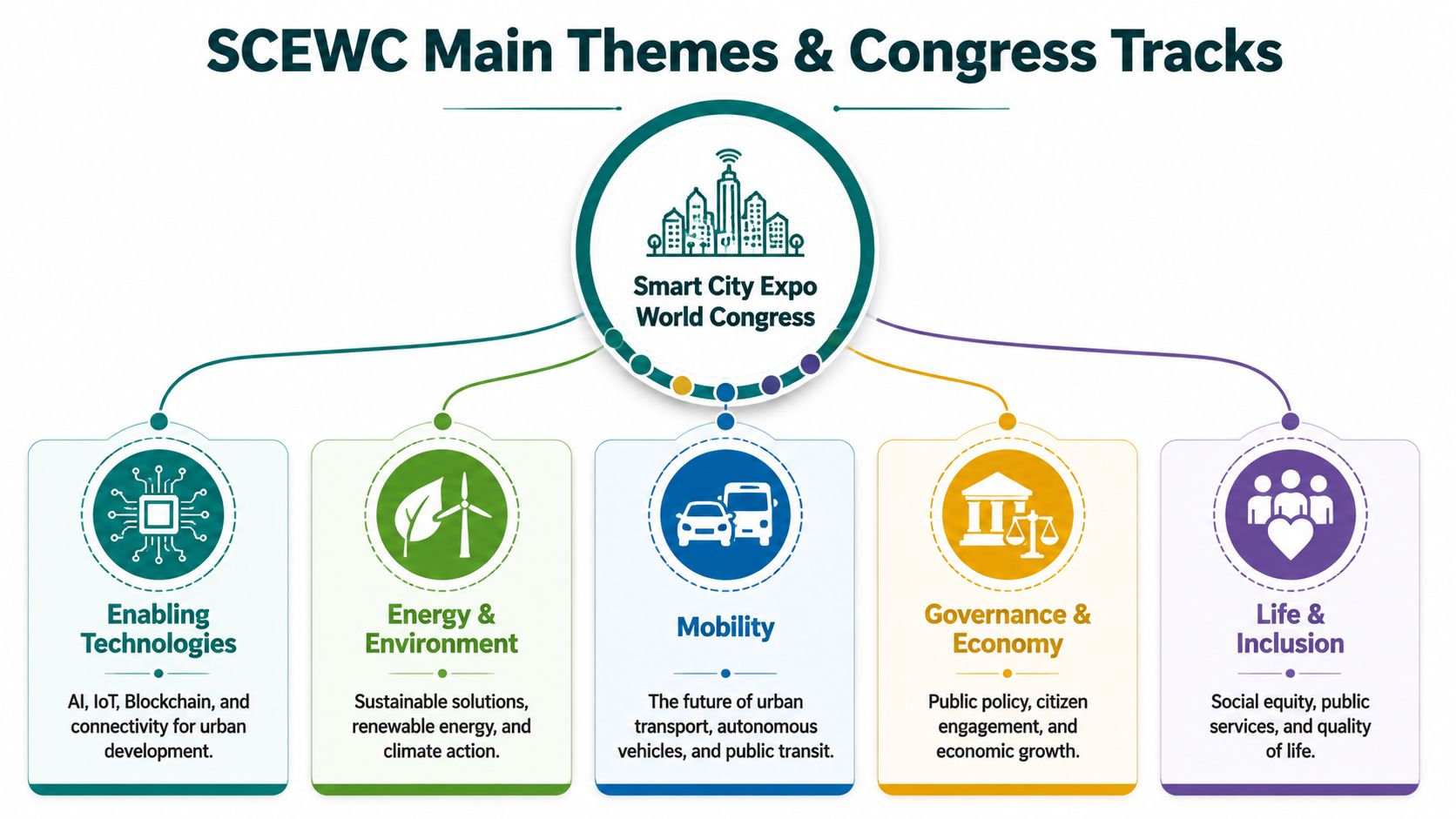
The congress is broad enough that a poor agenda can waste a day. The useful move is to map the event themes against your own operational priorities before you arrive. Most city and venue teams don't need “a bit of everything”. They need a clear route through the tracks that affect budget, risk, accessibility, resilience, and service quality.
A good primer before the event is Waymap's explanation of indoor positioning systems and their trade-offs. It sharpens the questions worth asking on the floor.
Mobility
The mobility track matters to more than transport authorities. Airports, stadiums, hospitals, campuses, and retail estates all manage movement at scale.
Expect this theme to centre on issues such as:
- Interoperability across modes. Bus, rail, walking, micromobility, and interchange experience.
- User experience under pressure. How people find their way when they're late, unfamiliar with the site, or need assistance.
- Operational practicality. Whether the system can handle disruption, closures, and changing routes.
What works here is technology that respects messy environments. What doesn't is a neat demo that assumes a static estate and ideal conditions.
Energy and environment
This track is often misunderstood as purely about utilities or renewables. In practice, it's also about the hidden environmental cost of maintaining urban systems.
For venue and public estate leaders, this theme should trigger questions about whole-life impact. Does the solution require installed devices across the estate? How often do they need replacing or recalibrating? What does maintenance involve? If the answer includes frequent physical intervention, the ESG story weakens quickly.
Enabling technologies
The buzz grows louder. AI, IoT, analytics, digital twins, connectivity, and data platforms all live here.
The mistake is treating enabling technology as value on its own. It isn't. It only matters if it improves a defined urban outcome such as access, flow, maintenance efficiency, or service planning. Ask suppliers to describe the deployment dependency chain. If their proposition depends on several additional systems, multiple contractors, or a heavy data integration layer before value appears, proceed carefully.
What to test in this track: whether the technology reduces complexity for the operator, or simply moves it somewhere else.
Governance and economy
This is the track many operational leaders skip, and they shouldn't. Governance determines whether a project survives procurement, public scrutiny, and internal sign-off.
Look for sessions that address:
- Procurement practicality
- Ownership and accountability
- Cross-department alignment
- Public value and inclusion
A technically elegant system can still fail if nobody can explain who maintains it, who updates it, and how success will be assessed.
Life and inclusion
This is the track with the biggest gap between rhetoric and delivery. Many exhibitors can describe “citizen-centric” outcomes. Fewer can show how a person with a disability, a first-time visitor, or someone under stress moves through the environment.
For UK delegates, this theme is where accessibility becomes concrete. It's not just about digital services in the abstract. It's about wayfinding, equitable access to spaces, clarity of information, and whether the built environment can be moved through with confidence by more people.
The best sessions in this track tend to connect inclusion to operations. Inclusive environments aren't separate from smart-city performance. They are a test of whether the system works for the public it claims to serve.
The Practical Value for UK Transit and Venue Leaders
For UK organisations, the Smart City Expo World Congress is most valuable when you use it to eliminate bad investments. That sounds negative, but it's often the highest-return outcome from attending. A project that looks modern in a presentation can become a long-term maintenance problem once it hits a live estate.
The practical challenge is familiar. Budgets are under pressure, but service expectations keep rising. Accessibility can't be treated as a side workstream. ESG reporting has become more serious. At the same time, estates teams are rightly sceptical of solutions that require large amounts of installed hardware, repeated site visits, or specialist upkeep.
The procurement reality UK teams face
Most public bodies and large venues don't buy technology in a vacuum. They buy through layers of governance, cross-functional review, and risk management.
That means the winning solution usually isn't the one with the most features. It's the one that can answer five plain questions:
- Can we afford it within current approval routes
- Can our teams maintain it without adding operational drag
- Will it still work when the estate changes
- Does it help with accessibility rather than just talking about it
- Can we explain its value clearly to finance, estates, and leadership
SCEWC proves useful as you compare systems side by side and ask the awkward follow-up questions that product pages avoid.
Why hardware-heavy approaches often struggle
Many urban technology ideas sound good until they meet a busy estate. Sensors fail. Devices need replacement. Layouts shift. Contractors change. Temporary works appear. The technology may still function, but the cost and effort of keeping it accurate can outgrow the original business case.
That's especially true in transport and public venues, where routes, access points, tenant arrangements, and operational patterns change frequently. UK decision-makers should use the event to identify solutions that minimise physical dependency and simplify long-term ownership.
A similar principle applies in adjacent domains such as surveillance and operational oversight. Systems only add value if they integrate sensibly into the wider estate strategy. For teams reviewing protection, monitoring, and operational resilience alongside smart infrastructure, this overview of Wisenet Security for business protection is a useful example of how security fits into a broader built-environment technology stack.
What good due diligence looks like at the expo
Strong buyers don't ask for a generic demo. They ask for deployment detail. They ask how updates are managed, how route changes are reflected, what happens in signal-poor environments, and who carries operational responsibility after launch.
For UK city-region transport teams, examples from real networked environments matter far more than polished mock-ups. That's why case-led thinking, such as the operational context behind navigation work in Birmingham and the West Midlands, is more useful than abstract “smart district” language.
If the supplier can't explain maintenance, governance, and change management in plain English, the technology probably isn't ready for a complex public estate.
The event pays off when you leave with a short list, not a bag full of brochures. The goal is to identify approaches that fit UK procurement logic, operational constraints, and public expectations without creating a second project just to support the first.
How Digital Accessibility Is Reshaping Smart Cities
A city or venue isn't smart if people can't move through it confidently. That includes blind and low-vision travellers, older visitors, people with cognitive overload, first-time users, and anyone moving through an unfamiliar or disrupted environment.
In the UK, this isn't just a design preference. The Equality Act 2010 shapes how organisations think about access to services and the built environment. Standards such as BS 8300 also matter because they push teams to consider inclusive access as part of mainstream design and operation, not as an afterthought.
Accessibility has moved from policy language to operational design
For years, many organisations treated accessibility as signage, lifts, and physical adjustments. Those remain important, but digital journeys now carry equal weight. A person's experience of arriving, orienting themselves, finding a platform, locating a reception desk, or reaching a specific door is part of the service.
That has changed the conversation at smart-city events. Accessibility is no longer a soft theme under “inclusion”. It's becoming a direct test of whether urban technology helps people move independently through real spaces.
A useful design lens is Waymap's thinking on inclusive design principles for built environments and digital journeys.
What practical digital accessibility looks like
In practice, accessibility technology works when it does three things well:
| Requirement | What operators should look for |
|---|---|
| Reliable guidance | Clear routing in complex indoor and outdoor spaces |
| Low estate burden | Minimal physical infrastructure and easier updates |
| Inclusive usability | Works for diverse users, not just a narrow test case |
Infrastructure-free navigation has become strategically important. Waymap's platform uses dead reckoning with device-native sensors and provides sub-3-metre accuracy in infrastructure-free environments, according to the publisher information provided for this article. That matters because it changes the deployment equation. Operators don't need to fill buildings with beacons or rely on GPS, Wi-Fi, or other installed hardware to guide people through difficult spaces.
Why this matters to estates and transport teams
The friction point isn't understanding accessibility. Most leaders already understand it. The friction is delivering it in a way that can survive capital scrutiny and day-to-day operations.
Hardware-based indoor navigation can struggle in complex estates because it introduces another layer of assets to install and maintain. Infrastructure-free approaches reduce that burden. They also suit environments where layouts change, staff turnover is high, or the estate team can't justify a large retrofit project solely to support wayfinding.
Named deployments matter because they show the issue isn't theoretical. Waymap has worked with WMATA, and the publisher information for this article also references venues such as Westfield London, SBS Transit, and the Royal Hospital for Children and Young People as examples of the kinds of environments where precise navigation matters. The point for SCEWC delegates is simple. Accessibility delivery becomes much more credible when the operating model is realistic.
Inclusive wayfinding is no longer a niche feature. It's part of how a modern transport network or public venue proves that digital transformation serves the public.
The organisations that benefit most from this shift are often the ones that stop treating accessibility as a separate workstream. They build it into procurement criteria, digital estate strategy, and visitor experience from the start.
A Strategic Guide to Attending SCEWC 2026
A good SCEWC visit should produce decisions, not just impressions. The event is large enough that you need a working method before you arrive.
Before you travel
Write down the two or three problems that matter this year. Not everything your organisation cares about. Only the issues that could realistically become a pilot, procurement exercise, or board discussion.
Then prepare a meeting filter:
- Operational fit. Can this work in a live public estate?
- Maintenance model. What physical or digital upkeep does it require?
- Accessibility relevance. Does it improve inclusive use of the environment?
- Governance readiness. Can the supplier answer ownership and update questions?
If your team is involved in event operations as well as venue technology, practical logistics guidance such as this guide for event organisers on QR codes can also help frame visitor flow and entry considerations around congress participation.
While you're on site
Split the day into three blocks. Use one for scheduled meetings, one for congress sessions, and one for unscripted floor time. Don't let back-to-back appointments swallow the whole event.
Ask every relevant exhibitor the same core questions. That creates a usable comparison set when you get home. Keep notes short. Capture constraint, deployment model, maintenance implications, and next step.
After the event
The post-event window matters more than the final afternoon in Barcelona. Within a few days, sort contacts into three groups: immediate follow-up, keep watching, and no fit.
Then circulate a short internal paper. Include what you ruled out, what looks viable, what needs further diligence, and which issues cut across departments. That's how the Smart City Expo World Congress turns into action rather than conference residue.
If your team is reviewing how to make transport hubs, public venues, and complex estates easier to find one's way without adding more hardware to manage, explore Waymap. We build precision navigation for indoor, outdoor, and underground environments, helping organisations deliver more accessible journeys with a lighter operational footprint.
FAQ
What is the Smart City Expo World Congress?
Smart City Expo World Congress is a yearly Barcelona event that brings together city leaders, operators, policymakers, and suppliers to examine how urban systems are planned, funded, and run. For UK public sector and venue teams, its real value lies in side-by-side comparison. You can test whether a product solves a live operational problem or adds cost, hardware, and maintenance.
When is Smart City Expo World Congress 2026?
The 2026 edition is scheduled for 3 to 5 November in Barcelona.
Why should UK city and venue leaders attend Smart City Expo World Congress?
Because it compresses months of market scanning into a few days.
That matters if your team is dealing with accessibility duties, ageing infrastructure, decarbonisation targets, procurement pressure, or rising expectations from passengers and visitors. The event gives councils, transport authorities, estates teams, and venue operators a practical setting to compare delivery models, ask harder questions on upkeep and integration, and spot which suppliers understand UK regulatory and operational constraints.
Who attends the Smart City Expo?
Attendees typically include local and regional government leaders, transport agencies, venue and estates managers, consultants, academics, infrastructure providers, and technology firms. The mix is useful because buying decisions in cities rarely sit with one department. Operations, digital, accessibility, finance, and sustainability teams all shape the outcome.
How do you get value from the Smart City Expo World Congress?
Go in with a short list of problems to solve, not a broad brief to "see what is out there". Ask each supplier the same questions on deployment time, maintenance burden, data governance, accessibility impact, and whole-life cost.
Then narrow quickly. A smaller number of serious follow-ups will produce more value than collecting a large stack of product brochures.
Is Smart City Expo World Congress useful for accessibility and inclusion planning?
Yes, if you treat accessibility as a core operational standard.
The strongest discussions are usually the ones tied to wayfinding, journey confidence, usability, and equal access to public space and services. For UK teams, the priority should be solutions that improve access without adding more beacons, kiosks, screens, or other estate assets that someone will need to power, inspect, repair, and eventually replace.
