2026 Disability Awareness Days: A Leader's Guide
How do you translate accessibility commitments from a policy document into a measurable, positive experience for every visitor?
That’s the gap most disability awareness days expose. Many organisations are comfortable publishing a statement, lighting a building, or posting support on social media. Far fewer use these dates as hard operational milestones that improve how people move through a station, campus, hospital, shopping centre, or stadium.
For operations and facilities leaders, that’s the opportunity. Disability awareness days can work as deadlines for audits, pilot launches, staff training, map updates, accessibility walkthroughs, and public reporting. They give teams a reason to act, a date to align around, and a visible moment to show progress to visitors, staff, partners, and boards.
The strategic case is already clear. In the UK, around 16 million people, or 24% of the population, have a disability, which makes accessibility a mainstream operational issue, not a niche one. It also sits squarely inside workforce, service quality, and ESG priorities. If you’re responsible for a large venue, the question isn’t whether disability awareness belongs in your plan. It’s whether you’re treating it as communications, or as delivery.
At Waymap, we’d take the second approach every time. Awareness without navigability doesn’t change much. Visitors remember whether they found the right entrance, platform, clinic, lecture theatre, customer desk, or accessible toilet independently.
That same thinking applies across disability categories, including neurodivergent staff and visitors. If employment inclusion is part of your remit, practical accommodations matter as much as public observance. This guide to autism workplace success is aimed at employers, but the operational lesson is broader. Good accessibility practice is built into everyday environments, not reserved for annual campaigns.
1. International Day of Persons with Disabilities
If you only pick one date from the disability awareness days calendar, pick 3 December.
International Day of Persons with Disabilities is the easiest point in the year to bring policy, operations, and public accountability together. It has enough recognition to earn executive attention, but it’s also late enough in the year to report what changed across the previous months. For facilities and operations teams, that makes it ideal for a visible delivery milestone rather than another awareness-only event.
In public venues, this day works best when it marks a completed improvement. That could be a refreshed accessibility map, a newly tested step-free route set, clearer arrival information, updated staff guidance, or the launch of audio navigation for complex indoor areas. What doesn’t work is announcing an intention with no operational follow-through.
Use December as a reporting deadline
The strongest IDPWD programmes start much earlier. Run the audit in early autumn, agree fixes in October, test in November, and use December to publish what changed.
That discipline matters because public expectations are rising while trust in accessibility promises remains fragile. Wayfinding is a common failure point in large spaces. In a 2023 UK Access Survey summary cited in the verified brief, disabled visitors identified navigation as a primary barrier in venues such as stadiums and universities. If your building is technically compliant but still confusing, visitors will notice the gap immediately.
Practical rule: Don’t treat IDPWD as a campaign date. Treat it as a go-live date.
A strong example is a university estate team using IDPWD to publish a campus accessibility update that includes route changes, entrance notes, lift information, and digital navigation coverage for academic and student services buildings. An airport or shopping centre can do the same by launching multilingual visitor guidance and demonstrating independent route-finding in difficult indoor areas.
IDPWD is also the right moment to be honest about legacy gaps. The history matters. Our own view on that is in Waymap’s piece on the legacy of 30 years of disability policy promises. The organisations that earn credibility on 3 December are usually the ones that show evidence of implementation, not perfect rhetoric.
2. Blind Awareness Month
October gives operators a simple test. Can a blind or low-vision visitor arrive, orient themselves, and complete a journey independently, or are they still dependent on staff rescue?
That’s why Blind Awareness Month matters operationally. It shifts the conversation from broad support to one of the hardest practical questions in accessibility. Can your venue provide reliable, repeatable navigation without assuming GPS will work indoors or that static signage will solve everything?
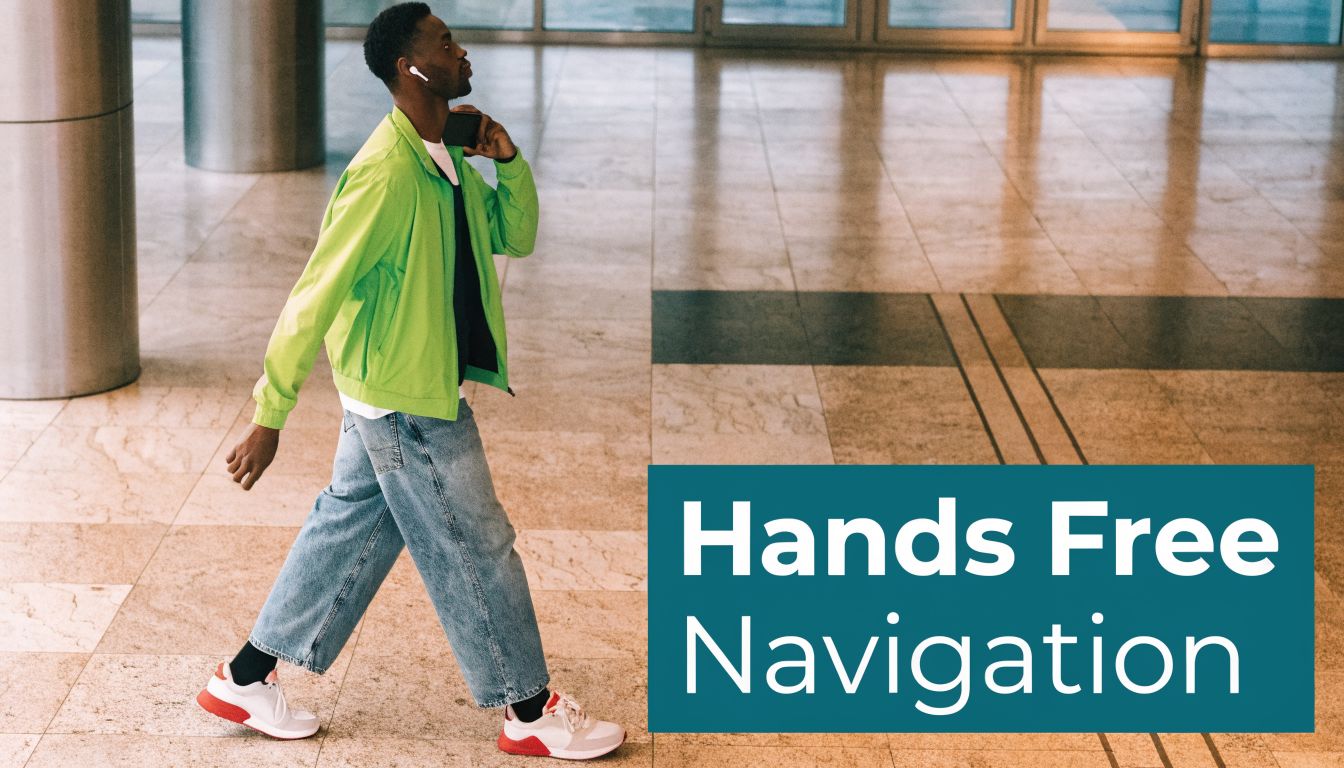
In England, 46% of disabled adults face difficulties accessing public transport, compared with 5% of non-disabled adults. That’s a transport statistic, but the lesson reaches beyond stations. If movement through public space is difficult at network level, every interchange, concourse, retail centre, hospital, and campus building has work to do.
Show the journey, not the feature list
Blind Awareness Month often produces well-meaning demonstrations that are too abstract. A better format is a live route test. Start outside, enter the venue, proceed to a real destination, then return through a different path. That shows where audio instructions, entrance identification, lifts, escalators, and decision points succeed or fail.
For that reason, we’d avoid “awareness booths” unless they’re tied to actual journeys. Put a blind user in the lead. Ask them to judge whether the route was independent, clear, and repeatable.
A metro operator can offer trial access to precision navigation in a station complex. A university can run audio-guided tours during induction. A shopping centre can map the path from public transport arrival points to customer services, toilets, lifts, and anchor tenants. Those are practical wins because they mirror real use.
For readers comparing approaches, Waymap’s overview of technology for the visually impaired explains where navigation tools fit and where they don’t.
Later in the month, it helps to show the experience in context:
The trade-off is straightforward. Staff assistance is valuable, but it doesn’t scale and it doesn’t deliver independence in the way a visitor experiences it.
3. Global Accessibility Awareness Day
GAAD is often treated as a digital event. For large venues, that’s too narrow.
If your website meets accessibility requirements but your building remains difficult to access, you’ve only solved half the problem. Global Accessibility Awareness Day is one of the best disability awareness days for joining digital accessibility with movement through physical space. That means your website, app, journey information, kiosks, maps, and in-venue wayfinding all need to line up.
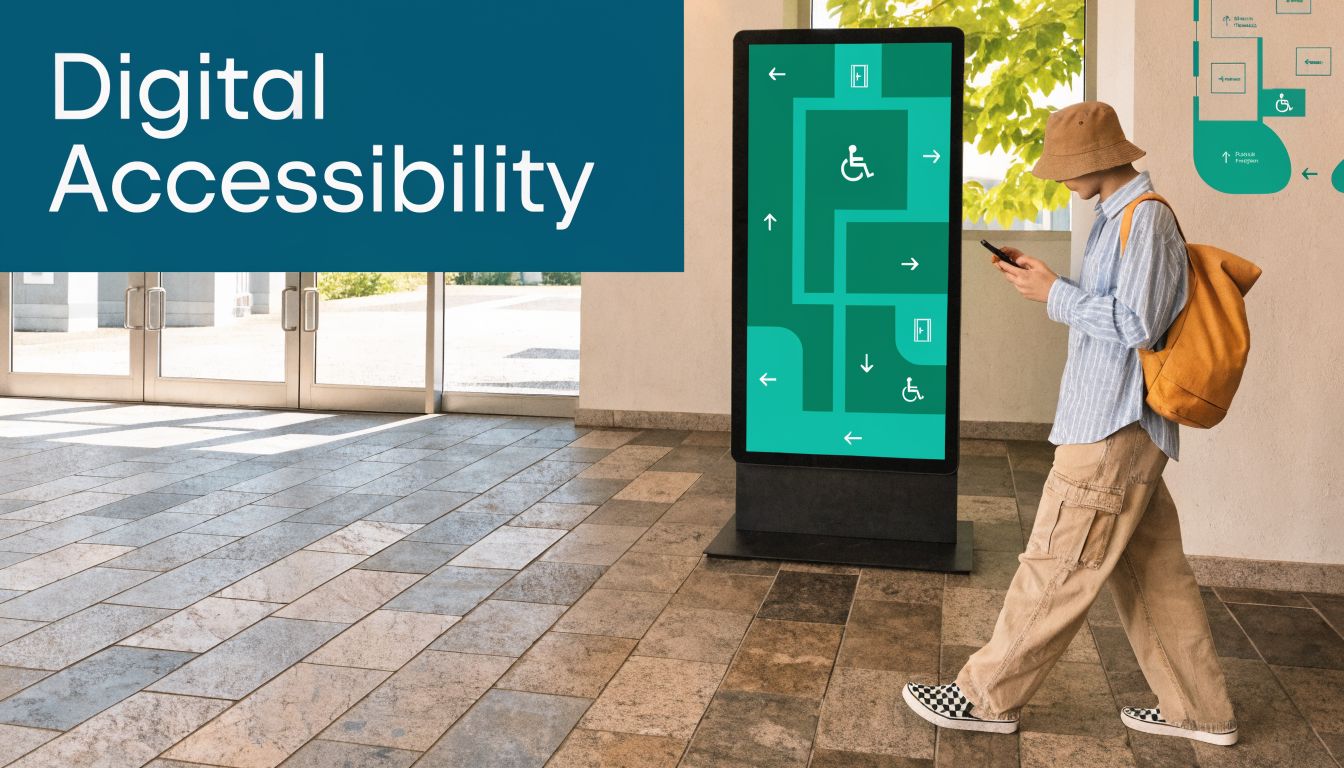
A useful GAAD question is this. Can a visitor plan their route before arrival, find the correct entrance, and continue confidently once they’re inside? In many venues, the answer breaks at the threshold. Online information may be decent, but the indoor journey still depends on guesswork, printed signage, or finding a member of staff.
Audit the handoff between digital and physical access
That handoff is where teams should focus their GAAD work.
A hospital trust might review whether appointment messages, campus maps, and front-door navigation point to the same entrance. An airport might test whether online assistance information matches the actual route to check-in, security, gates, and accessible toilets. A retail destination might compare the app journey with the experience from car park or station to store.
Accessibility fails when the digital journey promises certainty and the physical journey delivers ambiguity.
For teams using digital layers to improve physical navigation, detailed spatial modelling matters. It’s one reason we’ve written about how 3D site models support wayfinding and accessibility planning. The map isn’t just a visual asset. It’s the operational base layer for route quality, point-of-interest accuracy, and faster updates when layouts change.
GAAD works best when it ends with a defect list and an owner for each item. If there’s no action register, it was a seminar, not an accessibility programme.
4. Deaf Awareness Month
Deaf Awareness Month is where many venues discover they’ve over-relied on audio.
That isn’t only about announcements. It affects service desks, departure information, emergency updates, queue management, event interpretation, and the basic clarity of directional information. If a visitor misses spoken information, does your venue still communicate clearly enough for them to proceed without confusion?
This matters in high-flow environments where timing and sequence are part of the experience. Airports, rail stations, stadiums, and hospitals often assume public address coverage fills the gap. In practice, visual communication quality determines whether people can act independently.
Fix visual communication before you add more tech
The first audit should be low-tech. Check line of sight to screens. Check contrast. Check whether directional signs use plain wording. Check whether service changes appear where people need them, not only where staff think they should.
Then layer in digital support. Text-based journey prompts, visual route confirmations, clear point-of-interest naming, and screen-based service updates all help. For some users, that’s more useful than an accessibility app with an excellent audio interface but weak visual backup.
A strong venue example is a station that pairs real-time departure boards with precise text directions to lifts, accessible exits, customer support points, and platform access routes. In a university setting, the equivalent might be captioned orientation materials, interpreters for major events, and clear navigation support between lecture buildings and student services.
What doesn’t work is treating Deaf Awareness Month as a cultural event only, while leaving visual navigation unchanged. Celebration matters. So does operational design.
A practical standard for this month is multimodal communication. If one channel fails, another should still carry the message. That’s why Waymap’s role in a venue is usually part of a broader accessibility mix, not the whole answer. Audio guidance is powerful for many journeys, but inclusive operations need visual, textual, and human support working together.
5. Cerebral Palsy Awareness Day
Cerebral Palsy Awareness Day is a sharp reminder that route quality isn’t only about finding the destination. It’s also about the physical effort required to get there.
Operations teams often talk about “accessible routes” as if the label settles the matter. It doesn’t. A route can be technically available and still be tiring, indirect, poorly surfaced, dependent on a frequently broken lift, or impossible to understand under pressure. For people with reduced mobility or variable gait, these details define the experience.
Audit the route with movement in mind
On this date, the best exercise is a route walk with a checklist that covers more than compliance. Look at doorway widths, ramp gradients, resting opportunities, surface condition, handrails, turning space, lift reliability, and whether alternate routes are clearly explained when something is out of service.
That operational lens matters because mobility and access remain a major barrier. In the UK, 1 in 5 disabled people report difficulties navigating public transport, which is a useful reminder that wayfinding and mobility support have to work together. A route that is hard to decode becomes even harder when movement itself takes more energy.
For a stadium, this might mean reviewing the full spectator path from arrival point to accessible seating, toilets, refreshments, and exit. For a shopping centre, it could mean mapping the most comfortable route rather than solely the shortest one. For a university, it often means checking whether lift-dependent paths are backed up by accurate digital directions and fast updates when conditions change.
A common mistake is measuring the route from the planner’s point of view. Measure it from the user’s pace instead. If route instructions assume a standard walking speed or ignore fatigue points, they’ll fail a significant group of visitors.
6. Autism Acceptance Month
Autism Acceptance Month is often handled through staff awareness sessions and sensory-friendly events. Both are useful, but they only go so far if the environment itself remains hard to predict.
For many autistic visitors and staff, the stressful part of a venue isn’t just noise or crowding. It’s uncertainty. Not knowing which entrance to use, how long a route will take, where the quiet area is, whether there are too many decision points, or what happens if the planned path changes. Clear navigation reduces that cognitive load.
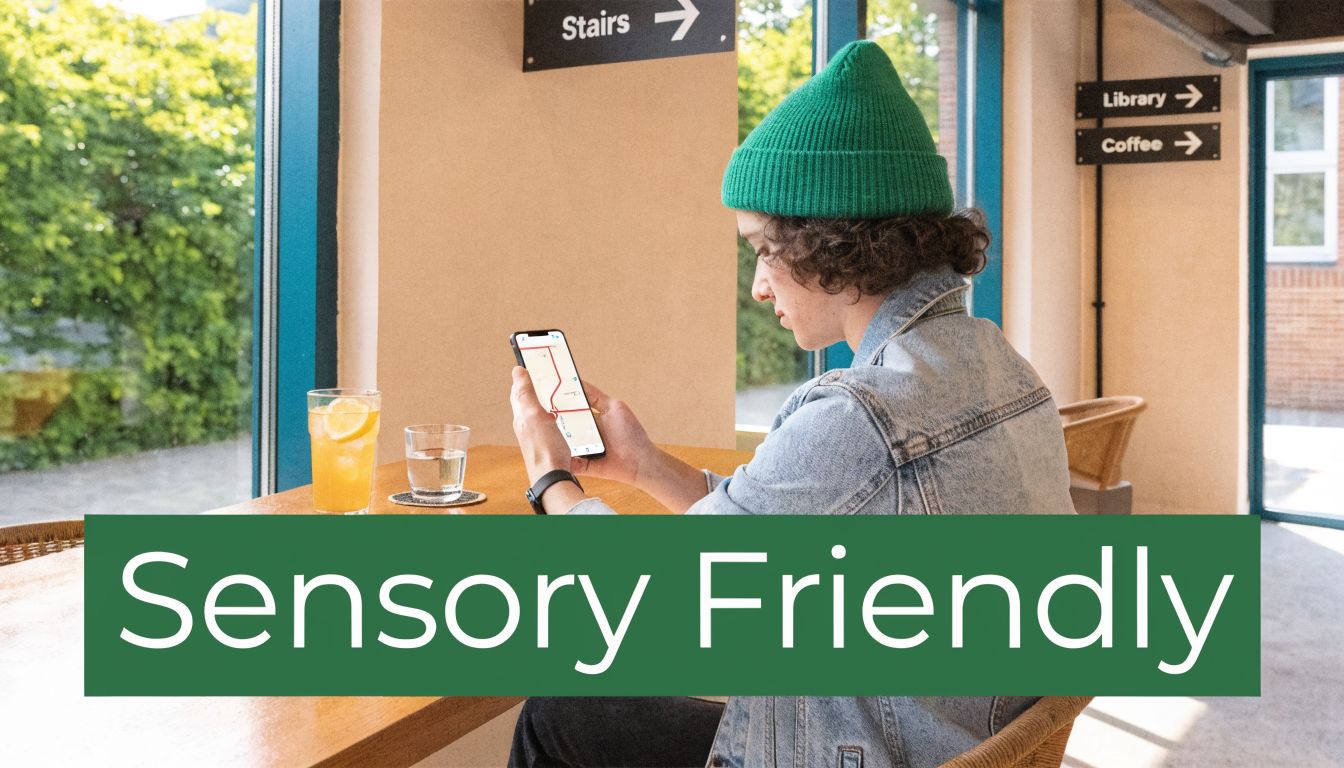
Predictability is an accessibility feature
The practical move in April is to review how much uncertainty your venue creates. Can visitors preview the route in advance? Are names consistent across booking systems, signs, and maps? Do staff explain directions in a calm, structured way? Is there a defined quiet space, and can people find it without asking?
Those questions matter in busy public settings. A hospital outpatient department, for example, may technically offer a calm room, but if the route to it is unclear the provision loses value. The same goes for shopping centres and campuses during peak periods.
A useful pattern is to combine sensory-friendly hours with route-specific guidance. Publish the least complex entrances. Flag lower-stimulation paths. Keep point names simple. Update disruption information quickly. In our experience, navigation design that removes ambiguity helps a much wider group than the one named on the event poster.
For employers and workplace teams, that principle carries into recruitment, onboarding, and office orientation. This tonen autism resource is external to Waymap, but it points to the same operational truth. Inclusion improves when the environment is clearer, more predictable, and easier to move through without extra negotiation.
Clear routes, consistent naming, and fewer surprises often do more than a well-meaning awareness poster.
7. Visual Impairment Awareness Month
Visual Impairment Awareness Month is the right time to test whether your venue supports independence, not guided dependence.
That distinction matters. Many organisations still assume accessibility for blind and low-vision visitors means trained staff at reception, good intentions, and someone available on request. That support is important, but it shouldn’t be the only operating model. People want to travel, study, shop, work, and attend events without having to announce their needs at every step.
The scale of the issue is hard to ignore. Scope has reported that over 2 million disabled people avoid journeys altogether because of poor wayfinding. For venue leaders, that should change the conversation immediately. Poor navigation doesn’t just frustrate people who arrive. It deters people before they set out.
Test one complete independent journey
A practical June exercise is to select one representative route and test it properly with blind and low-vision users. Not a symbolic walk. A real journey, at normal building speed, through live operating conditions.
Try a route from street to service point in a hospital. From station entrance to platform in a transport hub. From campus gate to lecture room in a university. From car park to anchor store and toilets in a shopping centre. Then ask a basic question. Could someone complete it independently, confidently, and without hidden staff intervention?
If the answer is no, awareness activity should focus on removing that friction. That might mean better route data, more reliable audio guidance, improved obstacle reporting, clearer naming, or better alignment between physical landmarks and digital instructions.
Waymap proves most practical. It was built first for blind and low-vision users, and it works where GPS struggles, including indoors and underground. That matters because independence usually fails at the exact points where signal-based tools become least reliable.
8. National Accessibility Awareness Day
National Accessibility Awareness Day is useful because it broadens the internal conversation. It gives accessibility leaders a way to bring in operations, finance, digital, estates, HR, and ESG without losing focus on disabled users.
The framing matters. Universal design arguments can be helpful, but they often become too generic. If the day turns into “accessibility helps everyone” with no disability-specific action, the work gets diluted. The better approach is to start with disabled users, then show where the same improvements also make the venue easier for parents with buggies, older visitors, temporary injury cases, new staff, and international guests.
Make the business case without watering down the purpose
There’s a strong operational reason to do that in the UK. Scope has reported £17.1 billion in annual cost to the UK economy from lost productivity linked to employment gaps for disabled people. That isn’t a venue-level number, but it tells senior leaders that exclusion carries real economic cost. Accessibility isn’t an add-on to performance. It’s part of performance.
This day is particularly useful for showing where infrastructure-light changes can outperform expensive retrofits. In our sector, that often means adding a digital wayfinding layer instead of waiting years for a full signage replacement programme. It can also mean better map governance, clearer point naming, staff route training, and faster updates when layouts change.
Good examples include a corporate campus using accessible navigation in onboarding, a city venue improving visitor wayfinding across multiple entrances, or a transport operator reviewing whether existing digital information supports independent movement. The point isn’t to call everything “inclusive” and move on. The point is to show that well-run accessibility programmes improve service quality and operational discipline at the same time.
9. White Cane Safety Day
White Cane Safety Day on 15 October should make operators more careful about how they talk about technology.
The white cane isn’t an old symbol waiting to be replaced by an app. It remains a practical, daily mobility tool that many blind people rely on. The right operational lesson is coexistence. Traditional mobility tools and digital navigation support different parts of the journey, and good venues respect that rather than framing innovation as substitution.
Build events around user choice
That makes White Cane Safety Day ideal for live demonstrations that show how tools work together. A visitor might use a cane for obstacle detection and immediate environmental reading, while using audio navigation for route structure, decision points, doors, and platform access. Those aren’t competing functions.
A strong event format is a joint session with blindness organisations, mobility specialists, and venue operations staff. Map one route, test it with different users, and listen carefully to where the cane, environmental cues, staff support, and digital guidance each add value. That conversation usually tells you more than a procurement meeting.
This day also creates space to discuss rights and street-level behaviour with city and transport teams. Are drop-off points clear? Are pedestrian crossings legible? Do retail displays spill into walking lines? Are temporary barriers managed properly? Cane users often reveal operational negligence that sighted teams have normalised.
What doesn’t work is celebrating independence while leaving avoidable clutter, vague routing, or inconsistent arrival information in place. The symbol deserves better than that. So do the people using it.
10. Disability Employment Awareness Month
Disability Employment Awareness Month is where public accessibility and workplace accessibility should finally meet.
Many organisations still separate the two. They improve front-of-house access for customers while leaving staff entrances, training rooms, offices, break areas, service corridors, and back-of-house routes untouched. That split is hard to justify, especially when employment outcomes remain unequal. In the UK, the disability employment gap is 28.5 percentage points, with 52.1% of disabled people in employment compared with 80.6% of non-disabled people. If you want to talk seriously about inclusion, your workplace has to be navigable too.
Audit employee journeys, not just visitor journeys
The October task is simple. Walk the employee journey from arrival to workstation, meeting room, welfare space, training area, and emergency information point. Then do the same for contractors and temporary staff. Most gaps appear in the places the public never sees.
For a stadium, that may mean service corridors and staff-only lifts. For a retail estate, stock rooms and management offices. For a university, admin buildings, staff onboarding routes, and access between departments. For transport operators, depots, control rooms, crew areas, and interchange spaces used by employees throughout the day.
A good programme also checks culture, not just layout. Do managers know what support exists? Are onboarding instructions accessible? Can a blind or low-vision employee find their way independently on day one? Are quiet rooms easy to locate? Are route changes explained clearly after refurbishments?
If accessibility stops at the customer entrance, it isn’t an inclusion strategy. It’s a visitor-facing veneer.
The most credible employers use Disability Employment Awareness Month to improve internal navigation, not just to publish hiring messages.
Comparison of 10 Disability Awareness Days
| Observance | 🔄 Implementation Complexity | ⚡ Resource Requirements | 📊 Expected Outcomes | 💡 Ideal Use Cases | ⭐ Key Advantages |
|---|---|---|---|---|---|
| International Day of Persons with Disabilities (IDPWD) | Medium, coordinated campaigns, audits | Moderate, partners, comms, audit teams | High 📊, global visibility; policy alignment | Showcase venue accessibility; launch accessibility features | ⭐ UN-backed recognition; strong ESG credibility |
| Blind Awareness Month | Medium, month-long programming and demos | Moderate, tech demos, partnerships with blindness orgs | Sustained engagement 📊, demo uptake & user feedback | Hands-free audio navigation trials; staff training | ⭐ Directly targets core Waymap users |
| Global Accessibility Awareness Day (GAAD) | Medium–High, digital & physical audits | High, tech teams, user testing, developer time | Improved digital-physical integration 📊, app/site compliance | Accessibility hackathons; app & website audits | ⭐ Frames accessibility as innovation and business advantage |
| Deaf Awareness Month | Medium, visual system upgrades & events | Moderate, captioning, signage, interpreters | Better visual communications 📊, improved real-time info | Visual wayfinding, captioning, VRS deployment | ⭐ Promotes multimodal accessibility (visual-first) |
| Cerebral Palsy Awareness Day | Low–Medium, targeted infrastructure checks | Moderate, route audits, mobility supports | Improved mobility access 📊, safer, barrier-free routes | Accessible route mapping; elevator/reliability audits | ⭐ Focuses on mobility-specific navigation needs |
| Autism Acceptance Month | Medium, sensory adjustments and training | Moderate, quiet spaces, staff training, communications | Reduced cognitive load 📊, calmer, predictable venues | Sensory-friendly hours; clear predictable navigation | ⭐ Addresses sensory and cognitive accessibility needs |
| Visual Impairment Awareness Month | Medium, demonstrations & user testing | Moderate, trials, audio/tactile materials | Sustained tech adoption 📊, stronger user confidence | Precision navigation showcases; tactile/audio guides | ⭐ Strong alignment with Waymap’s core functionality |
| National Accessibility Awareness Day | Low–Medium, cross-sector messaging | Low–Moderate, stakeholder engagement, case studies | Broad stakeholder buy-in 📊, business case for access | Universal design showcases; ROI-focused campaigns | ⭐ Frames accessibility as universal benefit and ROI |
| White Cane Safety Day | Low, community events and education | Low, demonstrations, speaker events | Symbolic engagement 📊, cultural recognition + outreach | White cane demos paired with navigation tech | ⭐ Strong historic and community significance |
| Disability Employment Awareness Month | High, systemic workplace changes | High, HR processes, training, recruitment efforts | Improved hiring & retention 📊, inclusive operations | Accessible staff areas; onboarding & ERGs | ⭐ Drives internal inclusion and operational accessibility |
FAQ
What are disability awareness days actually useful for in operations?
They’re useful as delivery deadlines. They give teams a fixed point to complete audits, launch improvements, train staff, test routes, and report progress in public.
Which disability awareness day should a large venue prioritise first?
International Day of Persons with Disabilities is usually the best starting point. It’s broad enough to cover multiple access issues and visible enough to support executive attention and public reporting.
How far in advance should facilities teams plan for a disability awareness day?
Plan several months ahead if you want operational change, not just communications. Audits, mapping updates, procurement, user testing, and staff training all take time.
Are disability awareness days only relevant to public-facing spaces?
No. They’re just as relevant to staff areas, onboarding routes, welfare facilities, and back-of-house operations. Employment inclusion depends on workplace navigability as much as visitor access.
How should venues measure whether an awareness day led to real improvement?
Measure completed actions and tested journeys. Look at whether routes became clearer, information became more consistent, staff support improved, and more people could get around on their own.
Where does Waymap fit into a disability awareness day plan?
Waymap fits where navigation is the barrier. It gives venues a hardware-free digital wayfinding layer that can be launched, tested, and improved around a specific awareness date, then used every day afterwards.
Your 2026 Accessibility Roadmap Starts Now
The most useful way to think about disability awareness days is not as a calendar of observances, but as a working schedule for operational change.
That shift matters because accessibility efforts often stall between intent and implementation. Policies exist. Commitments are published. Awareness is expressed. But the visitor experience remains inconsistent, especially in large, complex environments where navigation is the difference between independence and dependency. A person doesn’t experience your Equality Act position statement first. They experience the entrance, the route, the lift, the platform, the corridor, the signage, and the confidence or uncertainty that comes with each step.
That’s why awareness dates deserve a place in annual planning cycles. They create a natural structure for work that otherwise gets pushed aside. One date can anchor a route audit. Another can support user testing. A later one can mark the launch of a navigation improvement, a staff training refresh, or a revised accessibility guide. Used properly, these moments turn broad commitments into accountable deadlines.
There’s a wider strategic reason to work this way. Disability inclusion is not only a compliance concern. It sits inside operational quality, workforce participation, reputation, procurement, public trust, and ESG performance. Large venues are judged by how predictable, legible, and usable they are. If people can’t find their way without friction, your service quality is lower than it should be. If staff areas are inaccessible, your employment story is weaker than your public messaging suggests. If accessibility information is out of date, your digital transformation programme has a credibility problem.
The organisations that make progress tend to start smaller than people expect. They don’t begin with a grand accessibility manifesto. They begin with one route, one venue zone, one set of map corrections, one cross-functional audit, one independent journey test, or one launch tied to a specific date. That’s enough to create momentum, provided the work is real and repeatable.
At Waymap, we’d argue that navigation deserves to sit near the centre of that plan. It connects the physical environment with the digital one. It affects visitors, patients, passengers, students, staff, and contractors. It’s also one of the clearest areas where organisations can improve day-to-day accessibility without waiting for major construction programmes. An effective, hardware-free navigation layer helps close the gap between a building that is technically accessible and a building that is truly usable.
That matters especially in complex indoor and underground environments, where traditional signal-based navigation often falls short. Waymap was built to guide people to exact doors, platforms, and points of interest without relying on GPS, Wi-Fi, or installed hardware. For operators, that means accessibility improvements can move faster and remain easier to update as layouts, services, and visitor needs change.
If you’re planning 2026 now, don’t try to mark every date on the calendar. Pick one or two that match your operational priorities. Build a specific project around them. Define the journey you want to improve. Involve disabled users in testing. Publish what changed. Then keep the improvement live after the awareness day has passed.
That’s the true test. Not whether a venue observed the date, but whether someone’s journey became easier the next morning.
The wider policy and financial context also points in the same direction. If you want another reminder that disability-related barriers carry real legal and economic consequences, UL Lawyers’ guide on qualifying for DTC is a tax-specific resource, but it underlines a broader truth. Disability affects everyday systems, and practical support has real-world value. In venue operations, that support starts with access people can practically use.
If you’re planning your next accessibility milestone, Waymap can help you turn a disability awareness day into a live operational improvement. We work with transport operators, campuses, public venues, and large estates to deliver precise indoor, outdoor, and underground navigation without installed hardware, so visitors and staff can move independently through complex spaces every day, not just on awareness dates.
